Why this listing actually matters
Pine Labs raised $440 million and closed its first trading day up 14% at ₹252, implying a ~₹289B (~$3.3B) market cap. That’s below its ~$5B private mark in 2022, but it’s a clear vote that public investors believe the payments-to-platform pivot can scale. The June quarter turned profitable, yet margins are razor-thin-making monetization beyond basic payments the central execution test.
Key takeaways for operators and buyers
- Public-market validation at a disciplined price: a realistic benchmark for Indian merchant fintechs after years of private premium.
- Profitability is nascent: June-quarter net profit of ₹47.86M on ₹6.16B revenue suggests <1% net margin-software-led upsell must carry the story.
- International is meaningful but early: 20 markets, ~15% of revenue; scaling compliance and localization across geographies will be non-trivial.
- Competitive pressure remains fierce: PhonePe, Paytm, and Razorpay compete on ubiquity and price; Pine Labs leans on proposition and platform breadth.
- For enterprise buyers, a listed entity reduces counterparty risk and should improve roadmapping, reporting, and SLAs.
Breaking down the announcement
The stock opened at ₹242, touched ₹284, and closed at ₹252 versus an issue price of ₹221. Despite existing holders (Peak XV Partners, Temasek, PayPal, Mastercard) selling portions, demand held-an important signal after uneven Indian fintech listings in recent years. Operationally, revenue from operations rose 17.9% year-over-year to ₹6.16B in the June quarter; international revenue reached ₹943.25M (~15% of total), up from ₹795.97M a year earlier. Pine Labs flipped to a small profit (₹47.86M) from a ₹278.89M loss a year ago.
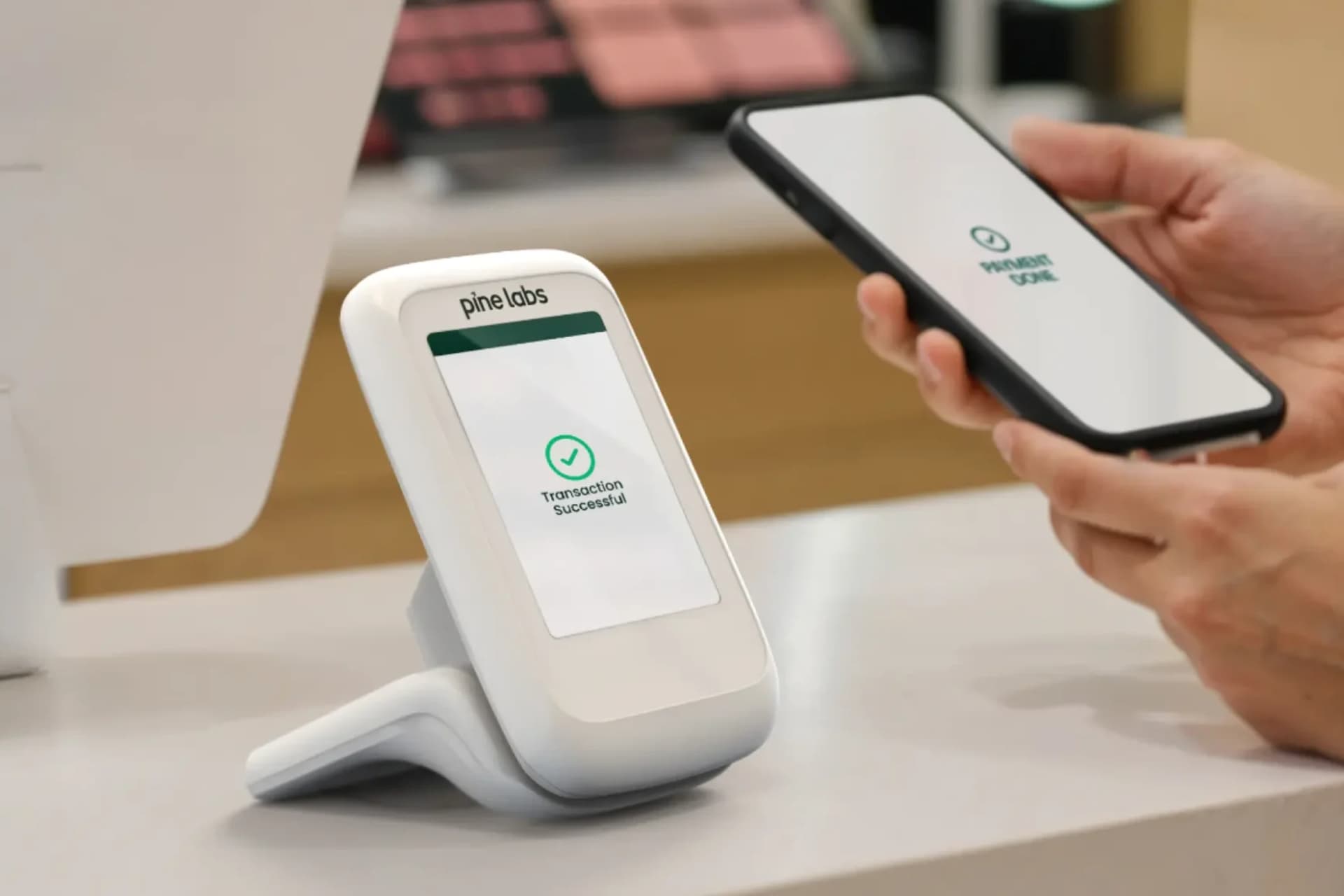
Strategically, the company has evolved from POS terminals to a broader merchant platform: bill payments, account-aggregator flows, and acquiring services. The CEO’s message reflected a shift from “startup” identity to public-company discipline—operating with founder urgency but enterprise-grade governance.
Industry context: timing and comparables
India’s IPO window is open—strong domestic liquidity, modest rate relief, and regulatory nudges are bringing tech listings back. Pine Labs’ debut follows Groww’s, and finance is leading global IPO volume in 2025, more than doubling year-on-year, according to Dealogic. In payments, the public markets are rewarding profitable growth with durable take rates and software attach; thin or volatile monetization gets penalized. This backdrop matters: Pine Labs’ model has to prove it’s closer to a platform with recurring, value-added revenue than a commoditized transaction processor.
What this changes for enterprise buyers
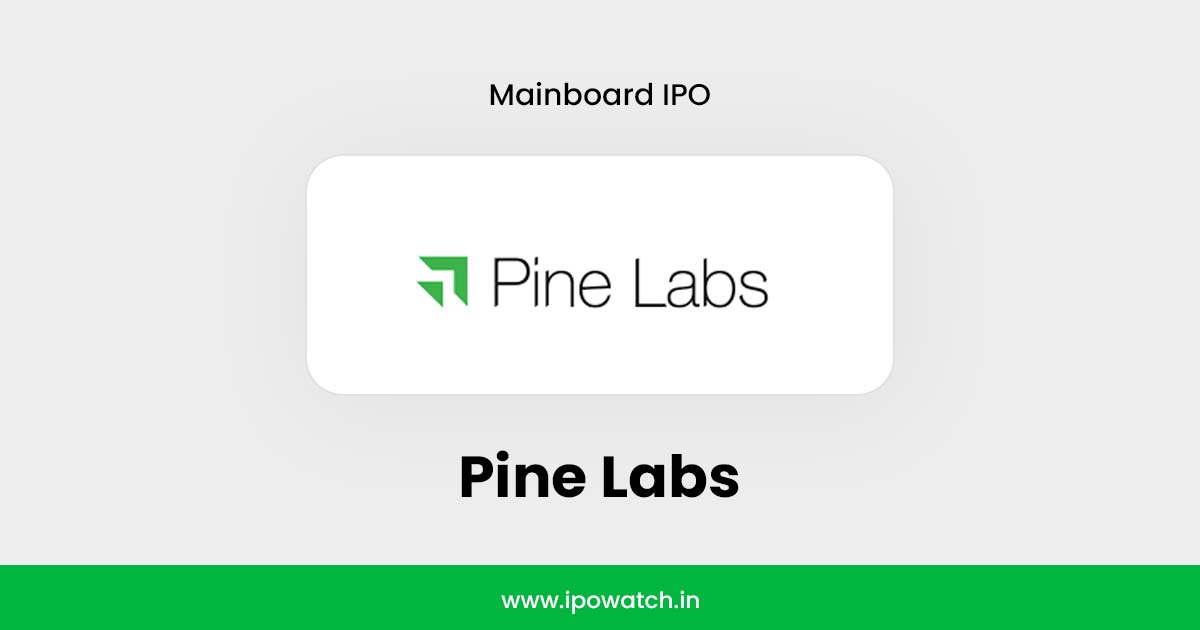
A listed Pine Labs reduces procurement friction for large retailers and brands that require audited financials, predictable SLAs, and board-level risk oversight. For multi-country merchants, the promise is a single vendor across India, Southeast Asia, the Gulf, and Australia—simplifying certification, settlement, and reconciliation while layering services like bill pay or account-aggregator integrations. If delivered, this can cut time-to-launch for new stores and channels and reduce operational overhead tied to fragmented providers.
that said, the business case hinges on software-led attach (e.g., value-added merchant services) to lift gross margins. Buyers should expect Pine Labs to sell on “superior proposition,” not price. If you’re primarily chasing the lowest MDR on UPI and cards, Razorpay or bank-acquirer blends may still undercut. If you need consistent omnichannel tooling, richer reporting, and cross-border rollout with one stack, Pine Labs’ platform pitch is stronger.
Risks and open questions
- Margin model: Sub-1% net margins are vulnerable to pricing pressure, especially in UPI-led flows with limited MDR. Can software/services scale fast enough to expand take rates?
- Regulatory complexity: Operating in 20 markets brings varied rules on KYC/AML, data localization, and settlement. Compliance costs could blunt international margin benefits.
- Execution at scale: Hardware commoditization and integration depth (APIs, reconciliation, dispute workflows) will determine differentiation versus cheaper gateways and in-house bank stacks.
- Competitive responses: PhonePe and Paytm push omnichannel acceptance; Razorpay continues to move upmarket. Expect price-based challenges that test Pine Labs’ “don’t compete on price” stance.
Operator’s perspective: adopt vs. wait
Adopt for multi-market in-store and omnichannel use cases where platform integration and service depth matter more than headline MDR. Wait or dual-source if your primary need is low-cost domestic acceptance at scale, or if you require proven performance in a specific new market where Pine Labs is nascent. Watch the next two quarters for signs of operating leverage: accelerating value-added services, rising international mix, and improving gross margin.
Recommendations
- Enterprise merchants: Run a 90-day pilot across two countries and channels (in-store + online) and measure authorization rates, settlement timeliness, reconciliation accuracy, and dispute SLAs against your incumbent.
- CFO/procurement: Structure contracts with performance-linked pricing (service uptime, reconciliation error thresholds) and explicit data portability and termination terms to avoid lock-in.
- Product/engineering: Demand clear API documentation and throughput benchmarks; test peak-load behavior and P99 latency across geographies before expanding rollout.
- Compliance leaders: Validate data residency, PCI/DSS posture, and local licensing status in each target market; require quarterly compliance attestations post-IPO.
- Investors and boards: Track three indicators over the next two quarters—gross margin trajectory, international revenue share >15% with stable unit economics, and churn/expansion within the top merchant cohort.