
Why this announcement actually matters
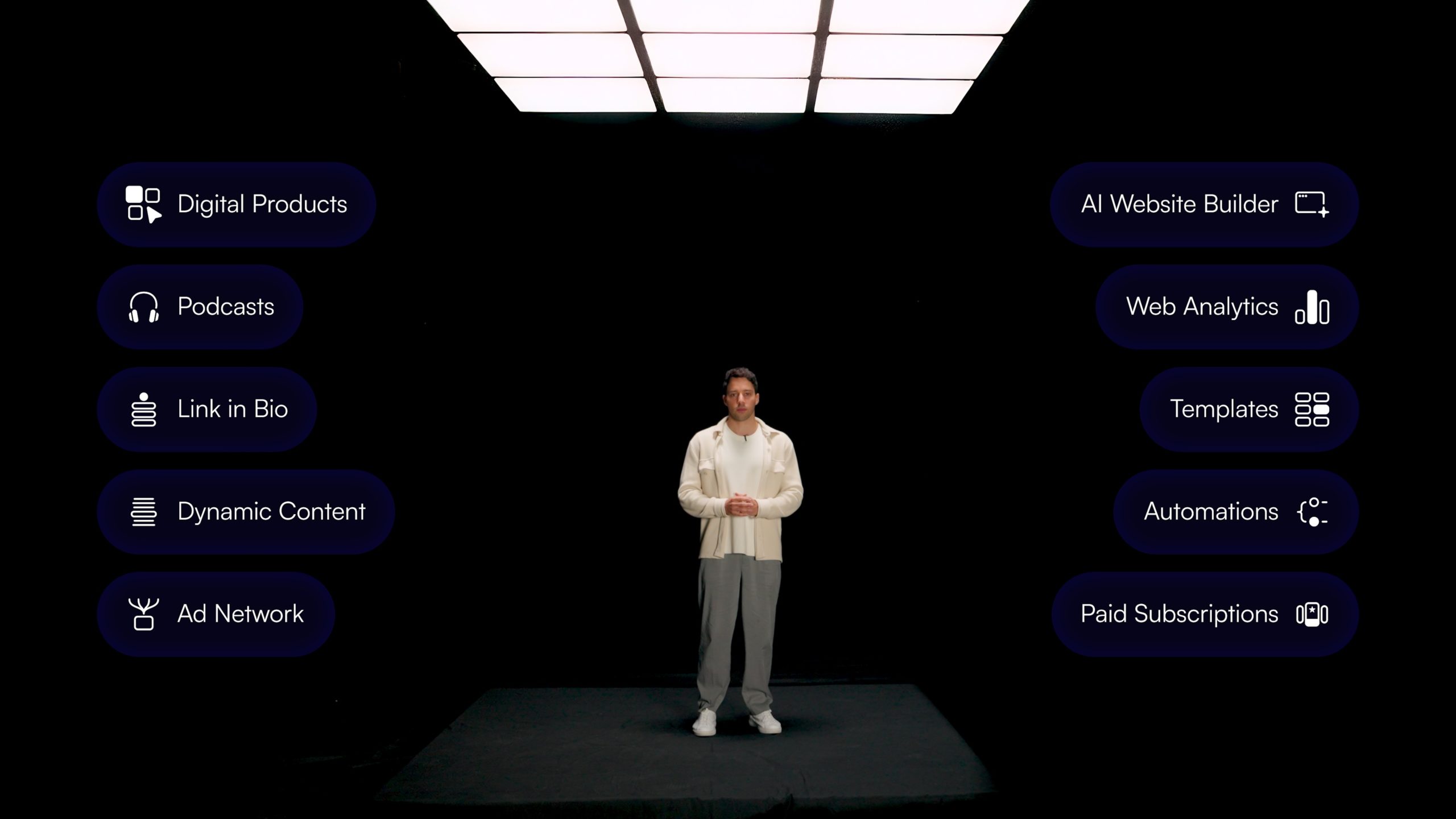
Beehiiv just expanded from a newsletter tool into a full creator platform: AI‑driven website creation (chat, drag‑and‑drop, and screenshot‑to‑site), real‑time analytics, podcast hosting, direct sales of digital products and paid subscriptions with no platform fees, enhanced ad tools, audience segmentation, templates, and automation. For operators, this centralizes creation‑to‑monetization workflows that typically span four to seven vendors, reducing cost, integration debt, and time‑to‑launch.
This matters because economics and control-not just features-determine creator viability. Eliminating platform revenue share on subscriptions and products can materially change margins, and keeping websites, email, and podcasts under one roof simplifies data governance and segmentation. The tradeoffs: lock‑in risk, privacy compliance, and IP concerns around the AI website builder.
Key takeaways
- Consolidation: Beehiiv now covers site, email, podcast, analytics, ads, and commerce. Expect lower vendor count and fewer brittle integrations.
- Economics: 0% platform fee on paid subscriptions and digital products can save 10% vs Substack and 5-12% vs Patreon. Payment processing and plan fees still apply.
- AI sites: Chat‑to‑website, drag‑and‑drop, and “upload a screenshot to recreate” can cut build time from days to hours. IP/trade‑dress risk if you mimic other sites.
- Growth stack: Real‑time channel attribution, ad marketplace, segmentation by location/age/gender, and automated workflows move Beehiiv toward an operator‑grade CRM‑lite.
- Portability and compliance will decide adoption: verify RSS for podcasts, export tools, consent management, and targeting rules before migrating core brands.
Breaking down the announcement
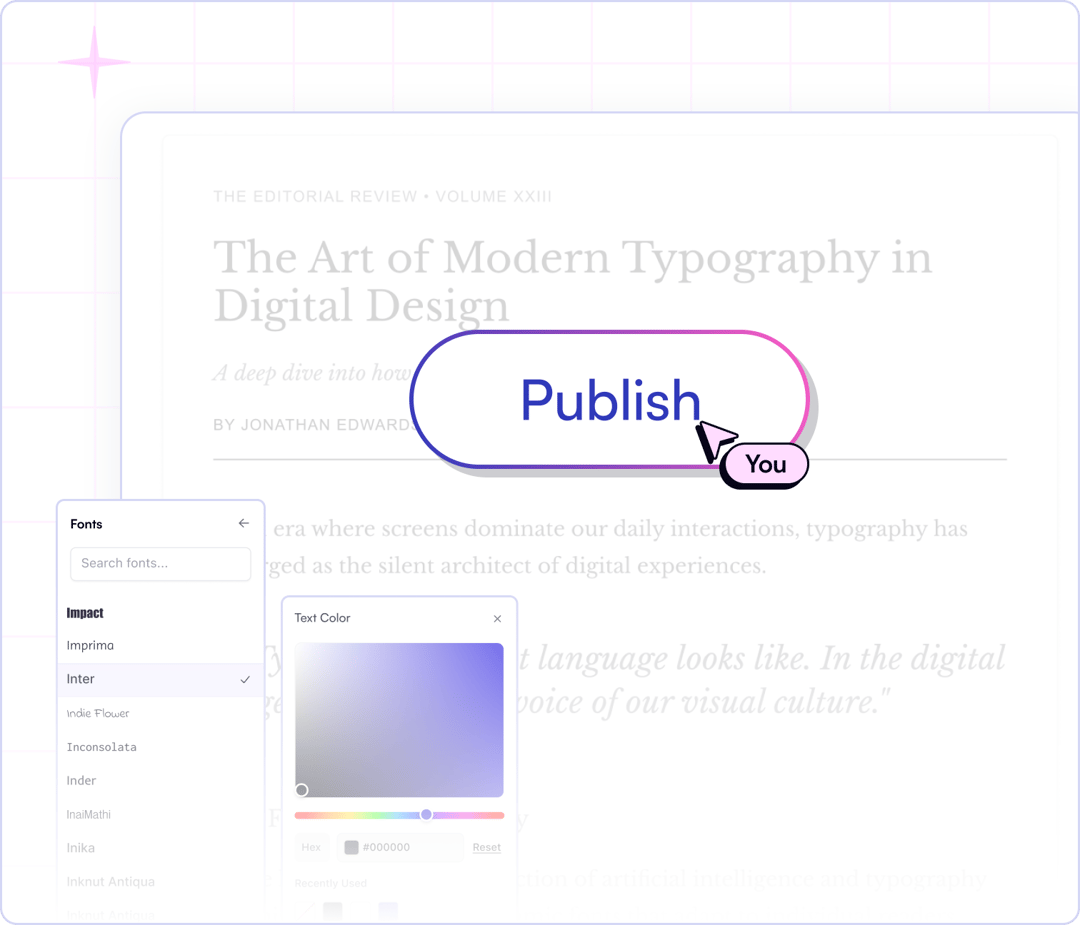
Website creation: Building on last year’s Typedream acquisition, Beehiiv’s AI builder supports natural‑language prompts, drag‑and‑drop, and “vibe coding” from uploaded screenshots. Creators can rapidly assemble full sites and match newsletter and site templates for a cohesive brand. Practical question: how strong are SEO fundamentals (schema, sitemaps, performance) and enterprise controls (roles, staging, rollback)? Not disclosed.
Monetization: Creators can sell digital products now, with courses and merch “next year,” and run paid subscriptions with tiers-beehiiv takes no platform cut. Stripe or equivalent processing fees still apply, and monthly Beehiiv plan costs remain. On $100,000 in subscription revenue, ditching a 10% platform fee saves $10,000 annually (before processor fees).
Podcasts: Hosting and releasing episodes from the same platform centralizes content operations. Adoption hinges on standard RSS distribution and 301 redirects for portability to and from Apple Podcasts, Spotify, and others—operators should confirm before migrating.
Growth and analytics: Real‑time analytics add channel breakdowns, estimated payouts for ads, and a campaign dashboard. Expect attribution based on UTMs and first‑party events; note that Apple’s Mail Privacy Protection degrades open‑rate accuracy, so plan to optimize for clicks and conversions over opens.
Audience and automation: Segmentation by location, age, or gender plus automated workflows (e.g., welcome series on subscribe) bring Beehiiv closer to ConvertKit/Klaviyo‑style lifecycle tooling. The practical edge is having this natively tied to site and newsletter data, simplifying orchestration.
Industry context and competitive angle
Substack popularized paid newsletters but takes a 10% cut. Patreon enables memberships but charges 5-12% depending on plan. Ghost provides 0% revenue share but expects more setup or managed hosting. WordPress + plugins (e.g., WooCommerce, Memberful) offers maximum flexibility at the cost of integration overhead. Kajabi and Teachable excel at courses but aren’t email‑first. Beehiiv’s bet: combine ease‑of‑use, creator‑friendly economics, and an ad network to become the default “creator OS.”

Timing makes sense: creators want to consolidate tools and fees, and Beehiiv has scaled distribution (35B emails sent, 55k creators) and capital ($33M Series B in April 2024). If the AI site builder proves reliable and their ad marketplace reaches liquidity, Beehiiv becomes a credible alternative to Substack and the WordPress stack for small teams and solo publishers.
Risks, governance, and what to verify
IP and brand risk: Uploading screenshots of other sites and “recreating” them risks copying trade dress or copyrighted assets. Set policy guidance for your team: use AI to accelerate original design, not to mimic competitors. Keep brand standards and legal review in the loop.
Privacy and compliance: Demographic segmentation and ad targeting require clear lawful basis and opt‑outs under GDPR/CPRA. Implement a consent management platform, avoid sensitive attribute inference, and document audiences. Ensure Beehiiv offers a Data Processing Addendum and regional data residency if required.
Analytics fidelity: “Real‑time” dashboards are constrained by tracking limits (e.g., MPP, cookie consent). Validate against GA4 or a server‑side analytics tool before reallocating budget based on new attribution models.
Commerce operations: Unless Beehiiv acts as merchant of record (not stated), you remain responsible for VAT/GST, sales tax, refunds, and chargebacks. Confirm Stripe configuration, tax settings, and invoice requirements for your jurisdictions.
Lock‑in and portability: Confirm custom domains, full content and subscriber exports, podcast RSS with 301 redirects, and ad campaign data export. Centralization helps—until it doesn’t; plan graceful exit paths.
Operator recommendations
- Pilot with a non‑core brand or vertical for 60-90 days. Stand up an AI‑built site, run a paid tier or product, test podcast distribution, and benchmark analytics against GA4. Track page speed and SEO basics before scaling.
- Model the economics. Compare Beehiiv’s 0% platform cut vs your current stack (e.g., Substack 10%, Patreon 5–12%). Include processor fees, plan costs, expected ad eCPMs, and support/engineering time saved.
- Lock down governance. Execute a DPA, implement consent management, and document audience segmentation rules. Add legal review for AI‑assisted site designs to avoid trade‑dress issues.
- Protect portability. Require custom domain mapping, confirm subscriber/content export formats, and ensure podcast RSS + 301 redirects. Keep periodic off‑platform backups of content and templates.
Bottom line: Beehiiv’s expansion meaningfully reduces tool sprawl and platform fees for many creators. If the AI site builder and ad network meet expectations, this is a viable “all‑in‑one” for small publishers and solo operators—just go in with clear governance, validated analytics, and a portability plan.