What changed and why it matters
Wall Street Journal reporting shows multiple high‑profile failures across Anduril Industries’ autonomous weapons portfolio – more than a dozen drone boats failing in a U.S. Navy exercise, an Anvil counter‑drone test that sparked a 22‑acre fire, a damaged Fury unmanned jet engine, and Altius loitering drones underperforming in Ukraine. These are not isolated glitches: they expose architectural, testing and governance gaps that directly affect safety, procurement risk, and operational readiness for buyers who have already awarded major contracts to the company.
Key takeaways for executives and product leaders
- Substantive change: fielded autonomy systems from a high‑profile defense startup have failed in both exercises and combat, raising immediate safety and contractual risks.
- Quantified incidents: “more than a dozen” drone boats failed, an Anvil test caused a 22‑acre fire, and Altius loitering drones were repeatedly unreliable in Ukraine.
- Technical pattern: repeated failure modes point to sensor fusion, edge inference latency, comms resilience, and change‑control shortcomings – not just hardware faults.
- Procurement impact: expect contract reviews, increased oversight, and tightened acceptance criteria from military customers and insurers.
Breaking down the failures (concise)
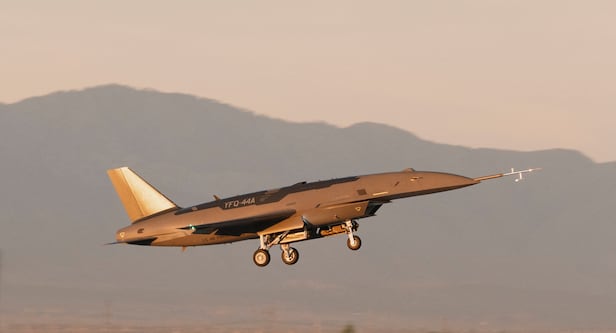
Drone boats in a Navy exercise reportedly suffered sudden communication loss, navigation errors and complete shutdowns. In Ukraine, Altius loitering munitions reportedly crashed or missed targets; some were abandoned. A Fury unmanned jet sustained engine damage. An Anvil counter‑drone test ignited a 22‑acre fire. Together these episodes span simulation, controlled exercises and live operational use – a troubling cross‑section for systems meant to operate autonomously in contested environments.
Why this is a systemic issue, not just bad luck
The incidents share common technical drivers: fragile sensor fusion when GPS and radar are contested; edge AI inference bottlenecks that produce latency spikes under load; brittle communications chains susceptible to jamming; and field updates or rapid release cycles that bypass rigorous qualification. Those issues compound risk in high‑stakes contexts where human intervention is limited or delayed.

Why now: market and operational context
Defense customers are accelerating procurement of autonomous systems because they promise operational advantages and lower manpower burdens. Pressure to field capabilities quickly — driven by active conflicts and congressional urgency — favors fast development cycles. That speed amplifies the consequences of immature tooling, incomplete adversarial testing, and weak change control.
How this compares to alternatives
Established primes and long‑standing contractors typically use longer qualification windows, hardware redundancy, formalized safety assurance processes, and independent verification labs. Startups like Anduril move faster and often push capabilities earlier, but the trade‑off is higher initial failure risk. For particular mission profiles — especially naval and densely populated urban operations — buyers should weigh rapid innovation against proven reliability.
Risks and governance implications
These failures create immediate operational risks (safety, collateral damage), contractual exposure (acceptance failures, penalties), reputational damage for both vendor and customer, and potential regulatory or congressional scrutiny. Insurance and export control reviews are likely to tighten. For allied deployments, interoperability and trust in partner systems can suffer material degradation.
Concrete recommendations
- Require independent, adversarial testing and red‑team validation before accepting systems into operational inventories. Insist on documented metrics for mean time between failure (MTBF), false positive/negative rates, and behavior under jamming/spoofing.
- Enforce stricter field‑software change control: no OTA or patching in the field without stage‑gated qualification and rollback capability.
- Mandate redundancy and graceful degradation: systems must fail to safe modes that minimize human and collateral risk when sensors or comms are degraded.
- For procurement teams: condition continued contracts on demonstrated reliability in environments that mimic contested operations, and budget for independent verification and sustainment engineering.
Operator’s short checklist (next 60 days)
- Audit deployed systems for software version, telemetry coverage, and kill/safe switch behavior.
- Run targeted adversarial tests (GPS spoofing, FHSS jamming, edge‑CPU load tests) before next deployment.
- Escalate any safety incidents to contracting officers and request root‑cause reports before further fielding.
Bottom line
Anduril’s reported failures should be treated as a wake‑up call: autonomy can deliver tactical advantage, but only with engineering rigor, adversarial validation, and procurement discipline. Organizations accelerating adoption need to pair speed with stronger testing, independent verification and contractual levers that force robustness — or accept the operational and political risks that follow.