Why this report matters now
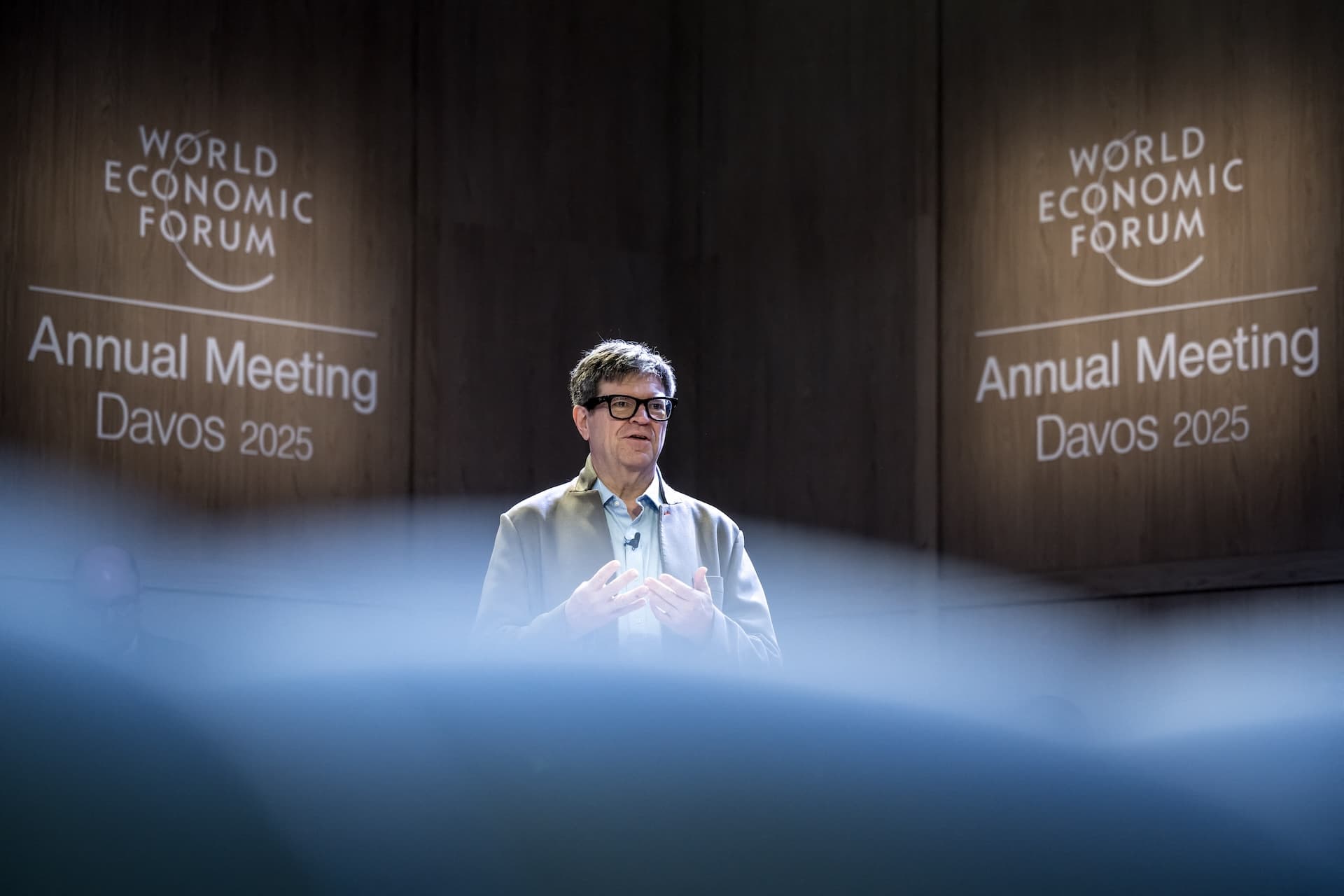
Financial Times reports that Yann LeCun, Meta’s chief AI scientist and Turing Award winner, plans to leave to found a startup focused on “world models.” If confirmed, this would remove Meta’s most forceful long‑horizon research voice and could redirect top FAIR talent at a moment when Meta is centralizing around faster model releases and product integration. Near term, Llama shipments likely continue; longer term, Meta’s ability to innovate beyond large language models could thin-and open source momentum may shift.
Key takeaways
- Substantive change: LeCun is reportedly preparing to depart in the coming months to raise a world‑model startup; his research agenda diverges from today’s LLM‑first playbooks.
- Strategic risk for Meta: Potential brain drain from FAIR and weaker influence for open research as the company races to ship productized assistants and Llama updates.
- Market timing: Video‑trained world models are compute‑hungry and early, but they underpin robotics, autonomy, and agents-areas expected to see step‑ups over the next 2-5 years.
- Operational impact: Little immediate effect on Llama adoption; watch for shifts in Meta’s open‑source posture and research investment mix if leadership changes follow.
- Budget reality: World‑model training likely requires eight‑figure compute budgets and tens of thousands of GPU‑weeks, favoring well‑funded entrants and strategic partnerships.
Breaking down the announcement
According to FT, LeCun has told associates he plans to leave Meta and is in early fundraising talks for a new venture centered on world models-AI systems that learn predictive representations of the physical world from video and interaction, enabling planning and reasoning beyond next‑token prediction. LeCun has argued publicly that LLMs alone will not reach human‑level intelligence and has advanced alternative architectures such as the Joint Embedding Predictive Architecture (I‑JEPA for images, V‑JEPA for video). He has suggested this path could take a decade to fully mature.
LeCun co‑founded FAIR in 2013 and has been a prominent champion of open research and open models. His reported departure would come amid Meta’s consolidation of AI efforts toward faster model cadence and product integration across Instagram, WhatsApp, and Facebook, while amassing massive compute. Mark Zuckerberg has publicly targeted roughly hundreds of thousands of H100‑class GPUs (on the order of 600k H100‑equivalents by end‑2024) and guided $35-40B in 2024 capex to fund AI infrastructure.
Industry context
Big labs are converging on scaled LLMs plus tool use and retrieval for near‑term ROI in assistants and productivity. In parallel, a quieter race is underway to build world models for robotics, autonomy, and agentic systems—see work from Google DeepMind on video‑centric models, Wayve’s end‑to‑end autonomous driving, and Tesla’s FSD training on multi‑camera video. These approaches are compute‑intensive but promise more grounded reasoning and controllability than language‑only systems.

Meta has played an outsized role in open models with Llama, catalyzing enterprise experimentation and cost‑down alternatives to closed APIs. LeCun’s influence helped anchor that open posture. If he exits, Meta could double down on product and scaled LLMs, with fewer resources for long‑horizon architectures like JEPA and embodied AI—creating space for a new entrant to own that thesis.
What this changes for operators
In the next 6-12 months, your Llama‑based builds and Meta AI integrations should be unaffected. The more material shift is strategic: Meta may prioritize near‑term product wins and efficiency over exploratory research. That could slow novel breakthroughs from FAIR and temper the pace of open‑source releases that challenge proprietary leaders on cost and transparency.
If LeCun’s startup coalesces around world models, expect it to compete for top video, robotics, and self‑supervised learning talent—and to seek partnerships with GPU providers, robotics platforms, automotive, and industrial firms with rich sensor data. Early offerings will likely look like foundation video encoders, simulation‑to‑real toolchains, or agent training stacks rather than general‑purpose chat models.
Competitive angle
OpenAI, Google, and Anthropic are optimizing for assistant quality, latency, and multimodality. A LeCun‑led startup would be differentiated by architecture and ambition: predictive, action‑oriented systems trained on video and interaction. In practice, that targets robotics, autonomy, digital twins, and operations optimization before office productivity. It also plays to customers with proprietary video/sensor data who want model advantage not easily reproduced by text‑only pretraining.
For Meta, the risk is not immediate product performance; it’s a potential erosion of long‑term research capacity and open‑source leadership signal. For buyers, that means hedging: keep Meta in your model portfolio, but do not anchor a multi‑year innovation roadmap on Meta’s research pipeline staying as broad without LeCun.
Risks and governance considerations
- Talent flight: If senior FAIR researchers follow, Meta’s research bench could thin; startups may face execution risk if they scale faster than their MLOps maturity.
- IP boundaries: California limits non‑competes, but code, data, and invention assignments remain binding. Expect careful separation between Meta IP and any startup assets.
- Data governance: World‑model training on video demands rigorous consent, privacy, and provenance controls; enterprises must validate rights at capture and aggregation.
- Cost/latency: Video models drive high training cost and inference latency; without hardware and compression breakthroughs, unit economics can be challenging.
Recommendations
- Dual‑source your model stack: Maintain a mix of open (e.g., Llama family) and proprietary APIs to insulate from any Meta research slowdown or licensing shifts.
- Allocate a small world‑model bet: If you’re in robotics, industrial, logistics, or AV, ring‑fence 10–15% of your 2025 AI budget for video/self‑supervised pilots (simulation pipelines, multi‑sensor datasets, and evaluation harnesses).
- Harden data pipelines: Begin audits of video/sensor data rights, retention, and labeling now; world‑model initiatives fail without defensible, high‑quality streams.
- Watch the signals: Track Meta’s next Llama release cadence and license terms, FAIR leadership changes, and whether LeCun’s startup announces compute partnerships—these will indicate how fast the research center of gravity is shifting.
Bottom line: If the FT report holds, this is less about today’s assistants and more about who will own the next architectural leap. Keep shipping with what works, while positioning to learn from—and selectively ride—the world‑model wave.