Executive summary – what changed and why it matters
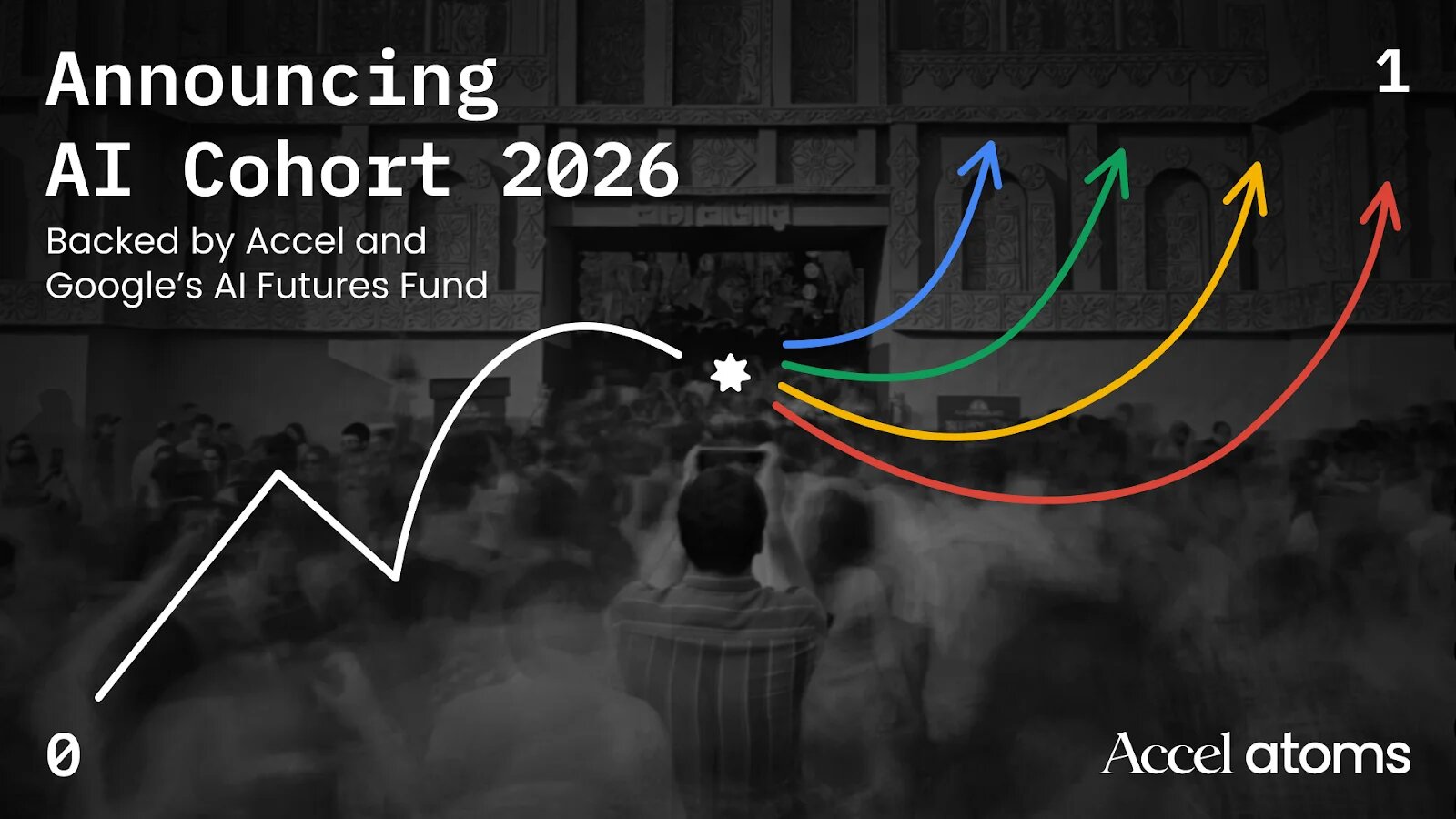
Google and Accel launched a joint program to co-invest up to $2 million per startup in Accel’s Atoms 2026 cohort, targeting India‑based founders and the Indian diaspora building AI product-first companies. Each startup can receive up to $350,000 in Google compute and model credits (Cloud, Gemini, DeepMind), early access to models and research teams, mentorship, and global immersion-a concentrated bet to accelerate India‑built AI products into global markets.
- Scale: Up to $2M per company, split up to $1M each from Google and Accel.
- Resources: Up to $350k in compute/model credits and early access to Gemini and DeepMind tooling.
- Focus: India and Indian‑origin founders building AI from day one (2026 cohort).
Key takeaways for operators and buyers
- This is a significant early‑stage capital plus platform package-$2M checks are larger than many pre‑seed or seed rounds and can push startups toward product‑market fit or Series A.
- Compute credits and early model access materially lower experimentation costs and speed up iteration, but they come with governance and supplier‑influence risks.
- Google will take equity and be “a material presence” on cap tables—founders should negotiate alignment on product autonomy and non‑exclusive terms.
- Program depth (mentorship, immersions, co‑development) is valuable for GTM and global market exposure, but success depends on execution and model safety practices.
Breaking down the offer — numbers and mechanics
Accel’s Atoms will co‑invest with Google under the Google AI Futures Fund. The headline figures: up to $2 million in combined capital per startup; up to $350,000 in credits across Google Cloud, Gemini, and DeepMind; early access to APIs and experimental features; technical support from Google Labs and DeepMind; monthly mentoring and immersion programs in London and the Bay Area including Google I/O. Accel has a track record: Atoms has backed 40+ companies that raised more than $300M in follow‑on funding.
Contextualizing the compute credits: $350k in Google Cloud/Gemini/DeepMind credits is meaningful for model fine‑tuning and prototypes. (Speculation: depending on workloads and model sizes, that could fund hundreds to thousands of model‑training hours for medium‑size models, or extensive API access for evaluation; founders should model consumption tightly.)
Why now — market timing and Google’s strategy
India combines the world’s second‑largest internet population, abundant engineering talent, and rising cloud and mobile adoption—conditions that make it attractive for product‑first AI companies. Google’s deal follows broader moves: substantial infrastructure investments in India (a recent $15B plan for a 1GW data center and AI hub), prior digitization funds, and competitors setting up local teams. The bite‑sized problem: India has not produced many frontier AI research labs; this program aims to push more talent from product to technical depth.
Risks, governance and operational considerations
There are four practical risks companies and corporate partners should track:
- Equity and influence: Google says it’ll be a material cap‑table presence. That helps exits and credibility but can constrain strategic independence—clarify governance rights up front.
- Supplier lock‑in vs multi‑model flexibility: Google asserts no exclusive requirement, yet deep integrations and credits can create de‑facto lock‑in. Architect for model‑agnostic inference if product resilience matters.
- Safety and compliance: Early access to experimental models speeds innovation but raises auditability, data residency, and regulatory risk—especially with India’s evolving AI oversight. Implement safety reviews and logging from day one.
- Expectation mismatch: Credits and mentorship don’t guarantee product‑market fit. Execution, distribution, and unit economics remain founders’ responsibility.
Competitive angle — how this compares
This is unique in combining sizeable checks with platform credits and direct R&D access from Google’s research orgs. Other programs may offer capital or credits, but fewer pair early‑stage co‑investment with model access and co‑development pathways. For founders choosing between offers, weigh valuation, control, and the strategic value of Google’s ecosystem vs independent cloud and model options.

Recommendations — who should act and how
- Founders building AI products in India or of Indian origin: apply if you need meaningful capital + model access; negotiate non‑exclusivity, governance limits, and clear compute burn rates.
- Product and engineering leads: design model‑agnostic stacks and cost controls so credits accelerate learning without creating single‑vendor dependency.
- Enterprise buyers and partners: use the program as a signal for vetted startups to pilot with, but require independent audits for safety, privacy, and export compliance.
- Investors and policy teams: monitor how Google’s presence shapes exits and competitive dynamics; track regulatory impacts around model provenance and data residency.
Bottom line: the Google‑Accel tie‑up is a meaningful push to turn India’s engineering talent into product‑led AI companies. It de‑risks early experimentation with capital and compute, but founders must manage equity, supplier influence, and governance to capture the upside without losing strategic control.