Executive summary – what changed and why it matters
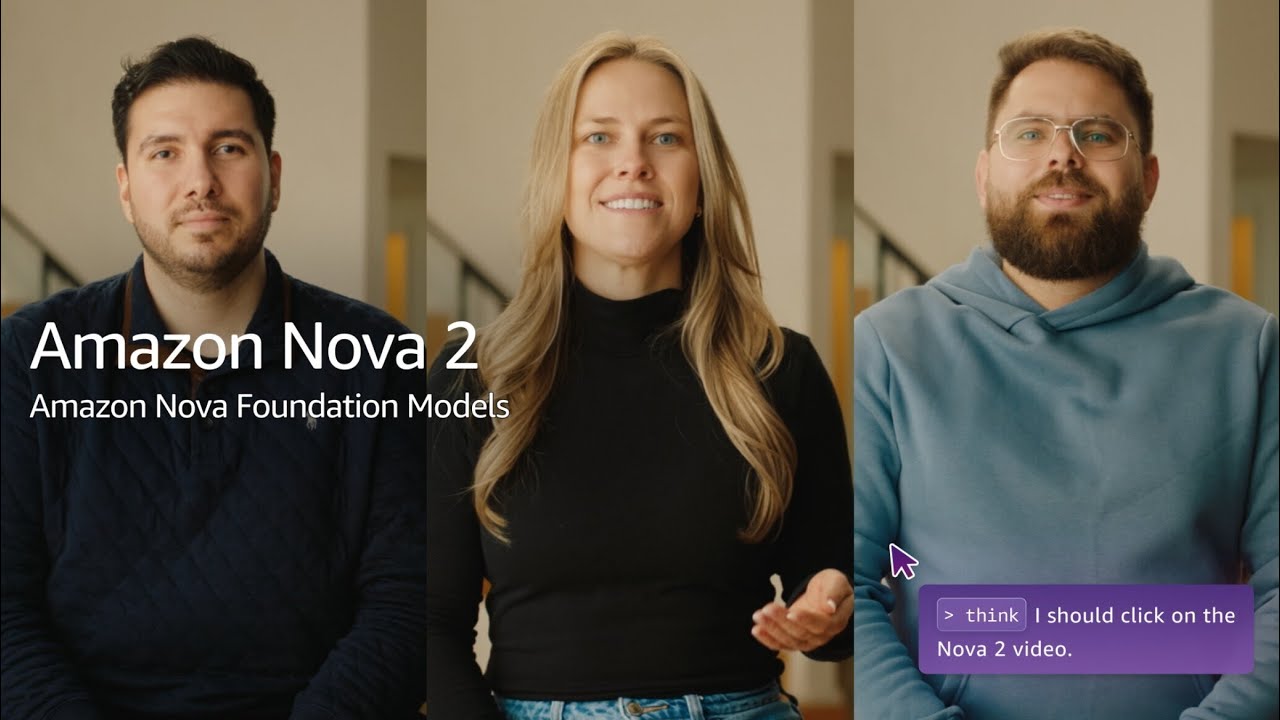
AWS released the Nova 2 generation (four models) and a paid customization service called Nova Forge in December 2025. The package – Nova 2 Lite, Nova 2 Sonic, Nova 2 Pro/Premier and Nova Omni, plus Nova Act for browser automation – gives enterprises a first‑party path to build private “frontier” models on proprietary data inside AWS. For operators and product leaders this changes customization and deployment calculus: you can now fine‑tune large, multimodal and speech‑capable foundation models inside your cloud boundary, which shortens time‑to‑value but raises governance and cost‑management requirements.
- Substantive change: Four Nova 2 models are GA and Nova Forge lets customers fine‑tune them on private data via Amazon Bedrock.
- Impact: Enables domain‑specific, private frontier models for speech, multimodal generation and agentic workflows.
- Risk: New operational burden — data governance, model evaluation, cost control, and compliance with sector rules.
Key takeaways for decision‑makers
- Four Nova 2 variants target different needs: Lite for low‑latency, Sonic for speech‑to‑speech, Pro/Premier for heavy generative workloads, and Omni for multimodal text+image output.
- Nova Forge is a paid, managed fine‑tuning service that creates private frontier models using your datasets; integrated with Amazon Bedrock and AWS security controls.
- Immediate opportunity for organizations already on AWS to reduce latency, improve domain accuracy, and keep data in‑cloud — but expect new policy, auditing and cost processes.
- Competes directly with fine‑tuning offerings from OpenAI, Google Vertex/PaLM and Anthropic; AWS differentiates on integrated speech + multimodal stack and deeper cloud integration.
Breaking down the announcement
The Nova 2 family is designed for enterprise workloads and is available via Amazon Bedrock across major regions (US East, Europe, Asia Pacific, etc.). AWS labels the release GA as of December 2025. Key product pieces:
- Nova 2 Lite: Lower‑cost, low‑latency reasoning model intended for high‑volume agentic and business logic tasks.
- Nova 2 Sonic: Speech‑to‑speech foundation model optimized for real‑time voice applications and natural conversational quality.
- Nova 2 Pro/Premier: High‑capacity generative model for complex content generation and heavy inference workloads.
- Nova Omni: Multimodal model producing text and images together — useful for creative workflows and rich customer experiences.
- Nova Forge: Managed fine‑tuning service that ingests customer data to produce private frontier models (called “Novellas” by AWS in marketing materials) while integrating with AWS IAM, monitoring and compliance tools.
- Nova Act: Agent service using a Nova 2 Lite variant to automate browser UIs and repetitive web workflows.
Why now — market context
Enterprises are moving from experimentation to production and want models that reflect proprietary knowledge, regulatory constraints and customer voice. Vendors (OpenAI, Google, Anthropic) already offer fine‑tuning or customization; AWS’s differentiator is first‑party integration: speech + multimodal + model customization inside the same cloud and native tooling for deployment and governance. That reduces integration risk for heavy AWS customers and accelerates build cycles for voice, multimodal marketing, and automated workflows.
Risks and governance considerations
- Data residency & IP leakage: Fine‑tuning with sensitive data requires strict controls; confirm whether training artifacts are retained and how backups are handled.
- Compliance: Healthcare, finance and government customers must validate Nova Forge data handling against HIPAA, PCI, GDPR and regional laws.
- Model failure modes: Overfitting, hallucination, and degraded speech accuracy in edge conditions — mandate red‑teaming and continuous evaluation.
- Cost risk: Fine‑tuning frontier models can be costly; plan budgets, quotas and lifecycle policies for model retraining and retirement.
How Nova compares
Compared with OpenAI GPT‑4 family, Google PaLM/Vertex AI and Anthropic, AWS’s edge is deep integration with cloud infrastructure and a combined speech + multimodal offering. OpenAI emphasizes model capabilities and a broad ecosystem; Google couples models with data platform services; Anthropic emphasizes safety. Choice depends on your cloud footprint, speech/multimodal needs, and regulatory posture.
Concrete recommendations — who should act and when
- If you’re heavily on AWS: Start a 3‑month pilot using Nova 2 Lite for an internal agent or Nova 2 Sonic for a voice POC. Use Nova Forge with a small, high‑quality dataset to validate accuracy and cost.
- Security & Legal teams: Run a data‑handling audit of Nova Forge workflows, confirm data retention and export controls, and require contractual SLAs for deletion and model artifact handling before production use.
- Product & ML teams: Define success metrics (precision, F1, latency, audio quality MOS), build evaluation suites, and budget for retraining cadence to avoid model drift and overfitting.
- Finance & Ops: Implement usage caps, cost alerts and a pilot ROI calculation comparing in‑cloud customization to third‑party hosted alternatives.
Bottom line: AWS just made it materially easier for enterprises to run private frontier models with speech and multimodal capabilities inside their cloud estate. That’s an operational advantage for AWS customers but it brings significant governance and cost responsibilities — plan pilots, lock down controls, and measure outcomes before broad rollout.