Executive Summary
Thesis: Ultrahuman’s Ring Pro redesign is a strategic bid to repair its U.S. market position by addressing wrist-wearable gaps in battery life, sensing accuracy, and on-device AI, even as its U.S. clearance timeline and patent dispute with Oura remain unresolved.
The Ring Pro overhaul centers on three pillars: a leap in reported battery endurance, migration of machine-learning inference from cloud to ring, and a revamped sensor array tailored for sleep and recovery metrics. While these changes recalibrate product differentiation against Oura and wrist-worn trackers, Ultrahuman’s comeback depends on third-party validation of performance claims and clearance under U.S. regulatory frameworks still in flux.
Technical Deep Dive: Battery, Compute, and Sensing
Ultrahuman asserts that Ring Pro’s power architecture delivers 15 days of typical use on a single charge and, with the optional Pro Charging Case, extends runtime to 45 days—what the company characterizes as a “3–4× battery advantage” over many current smart rings. These figures originate from internal testing protocols and await independent laboratory confirmation. If validated, such an endurance uplift would shift the consumer expectation from near-weekly recharging to multi-week autonomy, a metric critically tied to user agency and continuous health monitoring.
Driving this leap is a newly integrated dual-core processor that offloads inference tasks—previously relayed to the cloud—to on-device silicon. Ultrahuman claims that the local machine-learning engine reduces end-to-end data latency and keeps sensitive health data on the ring itself, bolstering user privacy. Yet the absence of benchmark comparisons against open standards or peer-reviewed latency metrics means these benefits remain aspirational until third-party tests corroborate latency improvements.

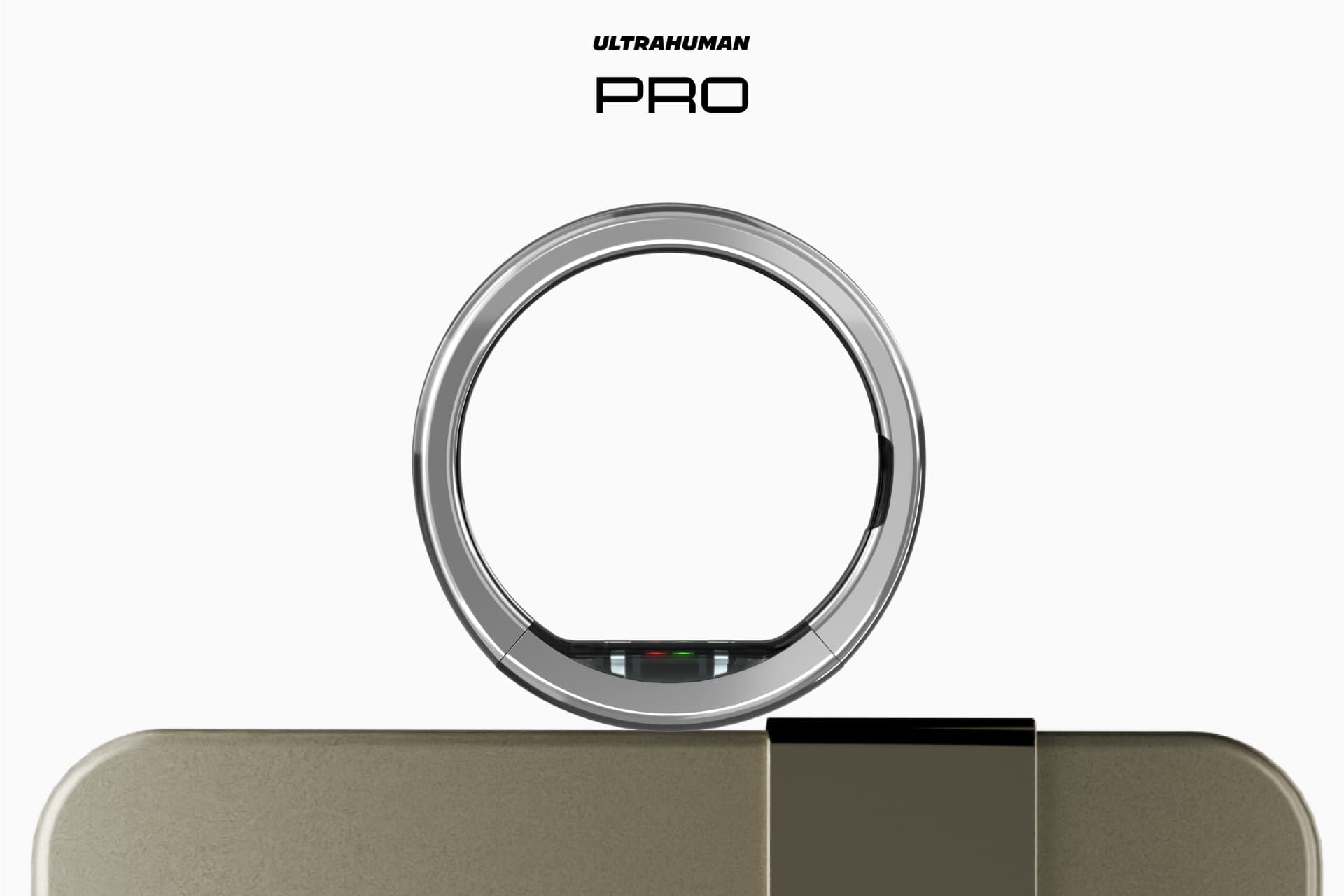
Sensing hardware also underwent a redesign. Ultrahuman incorporated a heart-rate detection architecture it says is optimized for sleep and recovery states—addressing a known weakness of wrist trackers that can suffer from peripheral motion and poor contact overnight. ProRelease Technology, a mechanical safety feature for emergency ring removal, and a titanium unibody shell complete the hardware revision. End-users stand to gain durability and comfort, but the 5–6% weight increase over the predecessor model could influence long-term wear compliance.
Software Strategy and Monetization Layering
The announcement introduced Jade, a new biointelligence platform delivered as a free baseline to all Ring users. Jade’s core promise is real-time, reactive health insights rather than retrospective dashboards, a distinction Ultrahuman’s CEO has highlighted as a strategic differentiator from existing analytics suites. The baseline service covers foundational metrics—heart rate, sleep staging, and activity tracking—while a suite of paid “PowerPlugs” unlocks advanced features such as AFib detection, respiratory health monitoring, and GLP-1 tracking.
Ultrahuman positions its AFib detection as a “world first” for smart rings, a company claim that calls for independent clinical validation and peer review before it can be integrated into diagnostic or procurement frameworks. Similarly, respiratory metrics and metabolic tracking features demand transparent performance data if they are to inform clinical decision-making or high-stakes consumer health behaviors. The tiered approach to software monetization raises questions about health equity and access: basic insights are free, but critical clinical features reside behind a paywall, shaping who can leverage the ring’s full diagnostic potential.

Importantly, Jade extends to existing Ring Air owners, a retention strategy that eschews device exclusivity for premium features in favor of software continuity. This layered model aligns with a broader software-as-service ethos, but also reframes user identity: wearers can be categorized by their willingness to invest in advanced health signals, shifting power dynamics between vendor and consumer over who controls what insights remain behind subscription barriers.
Regulatory and Legal Crossroads
Ring Pro is available for global pre-orders, excluding the U.S., with shipments slated to begin in March 2026 across Europe at €479 (£419). Ultrahuman states the device is “awaiting U.S. clearance,” though no formal FDA pathway, FCC certification, or medical-device filings have been made public. This regulatory ambiguity means the product’s entry into the world’s largest wearable market remains a conditional outcome.
Overlaying the regulatory wait is a public patent dispute with Oura. Ultrahuman has neither announced a settlement nor a licensing agreement, leaving the timing and terms of any resolution uncertain. The litigation stakes implicate future distribution, channel partnerships, and brand reputation. Delays or adverse rulings could restrict Ultrahuman’s ability to market key sensor innovations or on-device compute claims in the U.S., posing a substantial execution risk to its premium positioning strategy.

Market Positioning and Competitive Context
In branding Ring Pro as a flagship rival to Oura Ring 4, Ultrahuman targets consumers seeking an intersection of form, sustained battery life, and immediate health feedback. Oura’s incumbent position in sleep and readiness insights has carved out a niche among high-intent users, but its 5–7 day battery cycle and cloud-centric analytics have drawn criticism from those frustrated by frequent charging interruptions and data privacy concerns.
Ultrahuman’s narrative centers on empowering consumers with a more autonomous device—less tethered to smartphones or cloud uploads—which resonates with a human-stakes conversation about personal data sovereignty and the psychological friction of device dependency. The ring’s jewelry-inspired design also taps into identity signaling: wearables as expressions of lifestyle and well-being, not just tools for metrics. Yet whether this repositioning will tilt market share depends on real-world performance data, review benchmarks, and the cadence of U.S. market access, all variables still in flux.
Risks and Uncertainties
- Performance Validation: Battery and latency claims are internal benchmarks. Third-party tests are critical to substantiate “3–4× advantage” and on-device inference speed.
- Clinical Accuracy: Advanced health features, notably AFib detection billed as a “world first,” require peer-reviewed studies and regulatory approvals before clinical adoption.
- Regulatory Timing: Absence of public filings with FDA or FCC leaves U.S. rollout timeline indeterminate, exposing channel partners and investors to market-entry delays.
- Litigation Outcome: The unresolved patent dispute with Oura could curtail the use of key sensor or compute technologies or impose licensing costs that erode margin.
- Adoption Friction: Weight increase and subscription paywalls may affect long-term user retention and equity of access across demographics.
Implications for Stakeholders
These developments carry distinct signals for different constituencies:
- Procurement and Clinical Buyers: Without independent validation of advanced health claims and clear regulatory status, clinical rollout plans remain exposed to compliance and liability uncertainties.
- Retail and Distribution Partners: Inventory and marketing commitments hinge on U.S. clearance schedules and potential patent-related injunctions, elevating supply-chain exposure.
- Investors and Board Executives: Execution risk has shifted from product-market fit to regulatory and legal resolution, making transparency around filings and litigation progress a material indicator of future valuation.
- Consumer Advocates: The tiered software model raises questions about health equity—who can afford critical diagnostics and whose data is processed locally versus in the cloud?
Signals to Watch
- Formal U.S. regulatory submissions—FDA de novo filings, 510(k) clearances, FCC equipment authorizations.
- Public updates or court decisions in the Oura-Ultrahuman patent dispute, including potential licensing agreements.
- Third-party lab reports on battery endurance and on-device inference latency metrics.
- Peer-reviewed or clinical study publications evaluating AFib detection and respiratory health algorithms.
- Migration and retention trends following Jade and Ring Pro launch in Europe, indicating consumer confidence ahead of U.S. entry.