Executive summary — what changed and why it matters
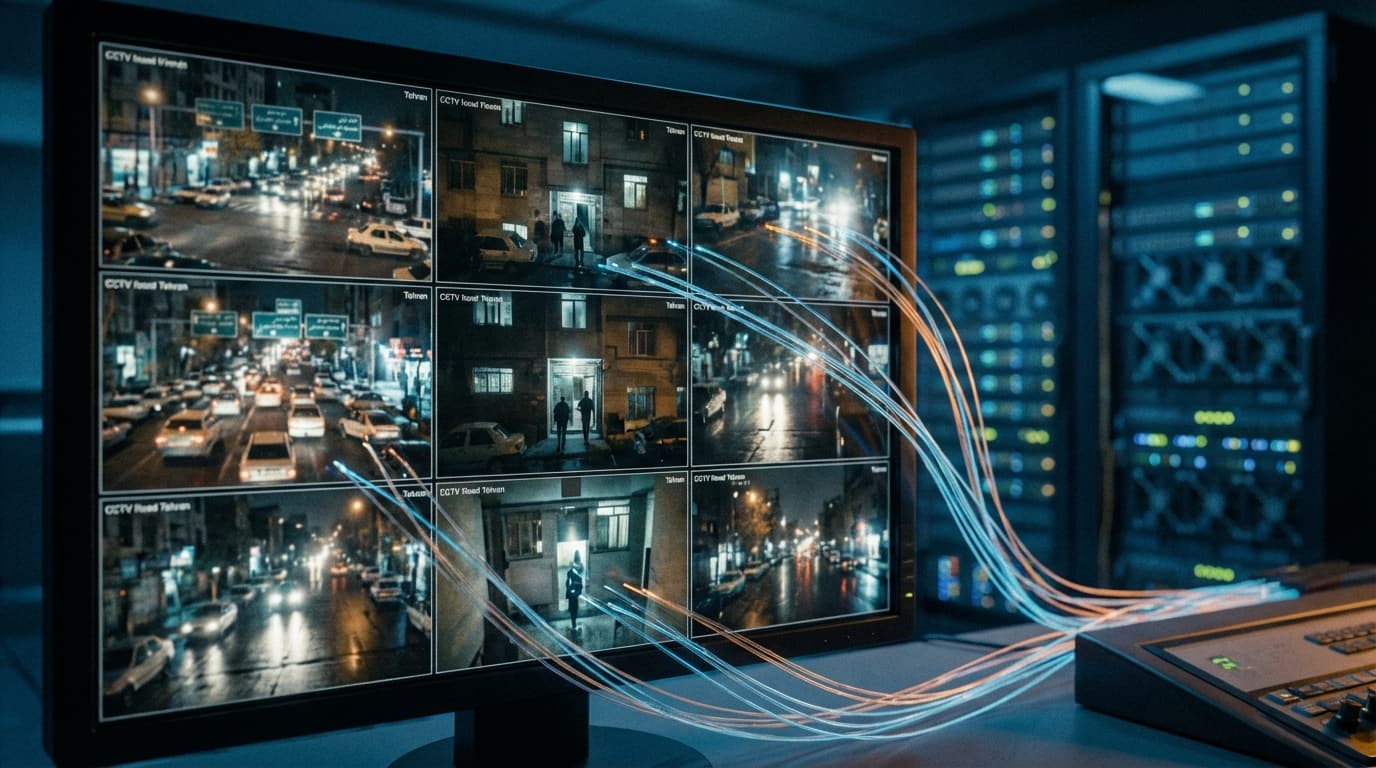
TechCrunch reports that operators allegedly commandeered “nearly all” Tehran traffic cameras for years and disrupted about 12 nearby mobile towers on the day of a March 2026 strike. This account underscores a critical operational shift: civilian IoT devices have moved from passive observers to active instruments in covert warfare, merging ubiquitous technology with traditional espionage and AI to erode the boundary between everyday surveillance and lethal targeting.
- Impact: TechCrunch reports near-ubiquitous camera access and mobile-tower interference enabled real-time tracking and warning-channel blockage.
- Scope: The alleged operation combined cyber intrusions on traffic cameras and mobile infrastructure, Unit 8200 signals intelligence, Mossad human assets, and AI-driven pattern-of-life analytics.
- Uncertainty: All operational details derive from anonymous sources cited by TechCrunch and lack independent public forensic corroboration.
Deconstructing the TechCrunch report
According to TechCrunch, operators streamed encrypted footage from Tehran’s civilian traffic cameras to servers outside Iran, building “patterns of life” profiles on high-value targets. One camera near the Pasteur Street compound reportedly provided vehicle make, model and timing data that blended with other intelligence inputs. On strike day, the report says operators simulated mobile-network congestion at roughly 12 cell towers to block leadership alerts, shifting the attack’s timing after a human asset confirmed a morning meeting.
TechCrunch also frames civilian IoT as a “force multiplier,” though key details—such as exact intrusion methods, duration of access, and any use of non-camera devices for disinformation—remain unverified and absent from public forensic evidence.

A new frontier in civilian surveillance
This reported operation illustrates how low-security consumer devices, once integrated with AI and traditional SIGINT, can become persistent intelligence feeds. The human stakes extend beyond battlefield advantage: the fusion of civilian infrastructure with covert operations challenges notions of agency, privacy and accountability for populations inadvertently swept into digital battlegrounds.

Contextual precedents
TechCrunch’s account follows earlier reports—without public confirmation—that Iranian actors compromised Israeli CCTV in 2025 and Hamas used private cameras before October 2023. The novel element here is scale and automation: AI-driven analytics may turn millions of low-value signals into a cohesive targeting mechanism, raising the bar for both offense and defense in future conflicts.
Diplomatic and human risks
The blurring of civilian and military domains heightens risks of misattribution, escalatory retaliation and collateral harm. Without transparent forensic data, attribution uncertainty can stall diplomatic responses and legal accountability, while degraded services—traffic management, emergency communications—may endanger urban populations far from any front line.

Policy implications
Advocacy: The reported weaponization of civilian IoT implies a need for regulators, procurement bodies and international institutions to treat everyday devices as dual-use assets. Potential measures include establishing minimum security baselines, mandating telemetry for critical-service hardware, and funding independent public forensic capacities to support transparent attribution.
What to watch next
- Official responses or technical counterclaims from Iranian authorities and allied intelligence services.
- Follow-up reporting that may disclose named sources, technical indicators or leaked forensic data.
- Statements from third-party forensic experts or declassifications clarifying the methods and attribution.