Executive summary
Production-ready generative-video tools are collapsing time and cost for indie filmmakers, enabling high-end visual effects on minimal budgets while surfacing governance risks around intellectual property, labor displacement, provenance and environmental impact. Platforms such as Google’s Flow (powered by Gemini, Nano Banana Pro and Veo) and peers like Runway and Luma AI have shifted generative post-production from a research novelty to a practical studio-capable process. This shift has empowered small teams to deliver ambitious short films that would once have required extensive VFX crews, but it also exposes unresolved questions about model training data, crew workflows, legal liability and carbon emissions.
- Substantive change: Indie creators can now generate complex effects in hours rather than weeks, combining AI outputs with traditional craft to compress production cycles.
- Anecdotal cost impact: Shots that previously could cost tens of thousands in VFX or elaborate rigging are now within reach of a solo filmmaker, though savings depend on project scope and remain largely estimated.
- Unsettled governance: Alleged use of scraped studio footage in model training, opaque provenance, potential labor displacement and compute-intensive pipelines could prompt litigation, regulation or reputational backlash.
Key observations
- AI as enabler, not replacement: Filmmakers retain control over narrative, sound design and visual style, using AI outputs as one of several layered elements rather than a turnkey solution.
- Shift in crew dynamics: Many creators report taking on technical VFX responsibilities directly, which can streamline small-team production but risks eroding traditional crew roles and entry-level opportunities.
- IP and provenance concerns: Some generative-video platforms are alleged to have trained on unlicensed studio content, heightening the risk of takedowns or copyright disputes when footage appears in festivals or streaming.
- Compute-driven emissions: Generating large frame sequences can consume significantly more compute—and thus electrical power—than streaming or conventional editing, according to anecdotal reports from pilot projects.
- Reputation tensions: High-profile directors voicing public skepticism contribute to stigma around experimental AI usage, potentially affecting festival programmers, distributors and collaborators.
Illustrations from Flow Sessions pilots
In September 2025, Google launched its Flow Sessions pilot, selecting ten indie filmmakers for a five-week program that provided unlimited access to its Flow platform—powered by Gemini, Nano Banana Pro and Veo—as well as mentorship in AI-driven post-production. The cohort’s shorts, later screened at Soho House in New York, spanned genres from surreal multiverse narratives to family lore.
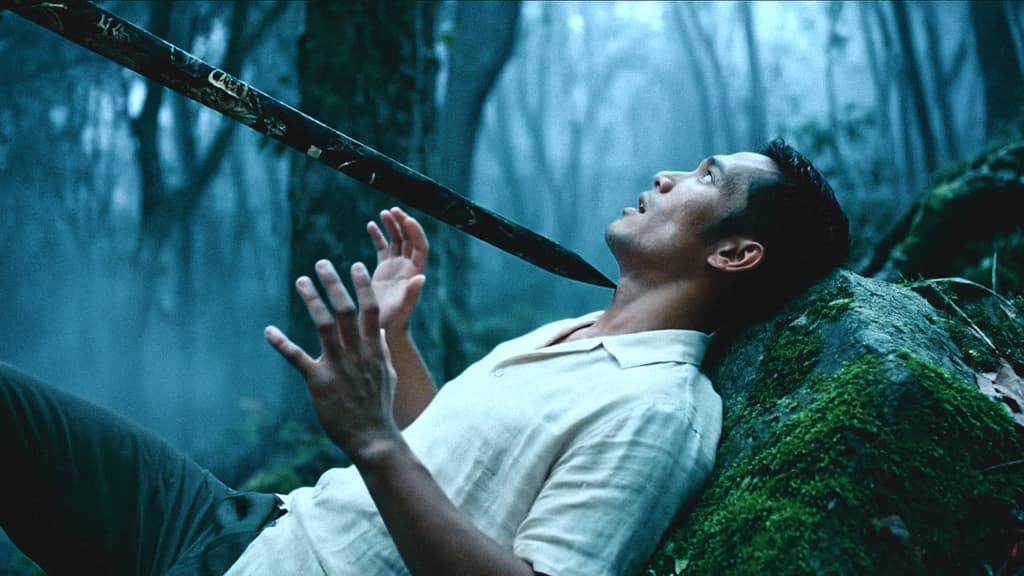
Brad Tangonan’s “Murmuray” illustrates the creative economy of generative video: an ethereal forest draped in mist was realized through a combination of Nano Banana Pro’s physics-inspired rendering and AI-driven compositing tweaks, a sequence that would normally demand specialized rigging and green-screen shoots. Similarly, Sander van Bellegem’s “Melongray” layered AI-generated particle effects onto live-action plates, molding gravity-defying visuals in post rather than on set.
Participant Keenan MacWilliam scanned botanical specimens to build a custom style guide for her short “Mimesis,” ensuring that generative outputs matched the film’s handcrafted aesthetic. Across each project, the pattern was consistent: creative professionals applied traditional tools—scripts, location sound, actor direction—and injected generative outputs at points where practical constraints rendered classical VFX or complex rigging infeasible.
Supporting ecosystem and funding streams
Beyond tool access, Google.org has committed US$2 million to the Sundance Institute’s AI Literacy Alliance, aiming to train 100,000 filmmakers in AI workflows through partnerships that extend the reach of Flow Sessions. Henry Daubrez, appointed Google’s first filmmaker-in-residence in February 2026, has spearheaded user co-development efforts, emphasizing that film quality emerges when artists impose vision and art direction onto AI rather than deferring control to algorithmic defaults.
Parallel investments from venture-backed studios and AI startups have poured capital into improving model fidelity and reducing inference costs. Yet despite reports of tens of millions of videos generated on Flow since its May 2025 launch, technical benchmarks comparing AI outputs to traditional pipelines—measured in frame rate stability, color consistency or editing sync—remain largely unpublished, leaving a gap between marketing claims and independent evaluation.

Why generative video is practical for indies now
The maturation of large video models over 2025–26, driven by advances in training architectures and scaling compute, has pushed generative video from experimental labs into usability for small-budget productions. Runway, OpenAI, Luma AI and others have followed Google’s lead, polishing user interfaces and integrating AI with non-linear editing systems. The resulting tools can generate configurable scene elements—dynamic skies, creature animations or crowd simulations—without custom code, reducing the barrier to entry.
Indie filmmakers, often operating with budgets under US$50,000, face acute constraints on time, equipment and crew. By leveraging generative outputs, these creators can explore creative risk—trialing multiple visual approaches in a single weekend—rather than anchoring to costly pre-production commitments. According to participant Leilanni Todd, the most significant gains emerge not from raw output quality but from the ability to iterate visual ideas in real time, a process she describes as “rapid creative riffing.”
Nevertheless, absent standardized performance metrics or cost-model disclosures, each team’s experience diverges—some projects incur unexpected compute bills, while others find model outputs brittle or laden with artifacts requiring manual cleanup. The lack of shared benchmarks underscores an uneven playing field, where technical know-how and local infrastructure can determine project viability more than narrative ambition.
Emerging governance risks
Labor displacement remains a central concern. As single filmmakers assume roles traditionally held by VFX artists, compositors and on-set technicians, the pipeline contracts. While some practitioners view hybrid workflows—combining AI outputs with hands-on craft—as an opportunity to upskill, others warn that entry-level positions could shrink, reducing pathways for new talent to gain on-the-job experience.

Intellectual property and data provenance are fraught territories. Platforms such as Runway have been alleged to train on scraped studio content, an allegation echoed in industry forums and legal commentaries. Without clear provenance metadata or licensing disclosures, filmmakers risk implicating unlicensed material in festival submissions or distribution agreements, a liability that could trigger takedown requests or copyright infringement litigation.
Reputational dynamics add another layer of tension. Several high-profile directors have publicly rejected generative tools at recent festivals, framing AI-assisted work as derivative or ethically questionable. This stance contributes to a polarized discourse, where experimentation can become stigmatized, potentially influencing festival programmers, distributors and peer networks when evaluating a film’s pedigree.
The environmental footprint of generative video is often underestimated. Anecdotal reports from pilot cohorts suggest that rendering a single minute of high-resolution AI-enhanced footage can consume several hundred kilowatt-hours of compute energy—significantly more than playing or streaming that same minute. As regulators and ESG teams sharpen focus on carbon accounting, compute-driven emissions may emerge as a material factor in production budgets and vendor selection.
Trade-offs in VFX workflows
Traditional VFX pipelines offer robust quality controls, predictable budgets and established intellectual-property clearance processes. Indie teams typically engage boutique VFX houses for tasks such as 3D modeling, compositing or crowd simulations, remitting hourly rates that can quickly escalate but provide legal certainty and artisanal oversight.

Generative-video workflows invert this model: indie filmmakers can spin up AI-driven sequences without external vendors, achieving abandoned-city panoramas or dynamic creature animations through prompt engineering and local inference. The primary trade-off lies in output brittleness—AI frames may exhibit artifacts, shift in unexpected ways across shots or lack the semantic consistency required for long takes—necessitating manual curation and frequent retakes.
Hybrid approaches have begun to surface as pragmatic middle grounds. Some studios combine practical set builds with vetted AI augmentation—using real actors in physical environments and applying generative effects in compositing layers. This blend retains the material authenticity and IP safeguards of practical shoots while harnessing AI to accelerate iteration and expand creative palettes.
Outlook and industry inflection
The proliferation of production-ready generative-video tools marks a foundational shift in indie filmmaking, democratizing access to high-end VFX and empowering artists with minimal resources. Yet the absence of industry-wide standards for provenance, IP licensing and environmental metrics leaves a governance vacuum. As studios, festivals and regulators begin to grapple with these questions, the future of generative video may hinge less on technical prowess than on the evolution of collective norms and legal frameworks.
Over the coming year, stakeholders—from software providers to film commissions—are likely to pilot provenance metadata schemes, carbon-tracking integrations and licensing registries to mitigate emerging risks. How these efforts coalesce will shape whether generative video remains a tool for diverse storytelling or becomes ensnared in litigation, regulatory constraints and ethical controversies that limit its creative promise.
Source: TechCrunch reporting on Google Flow Sessions (published 2026-02-20).