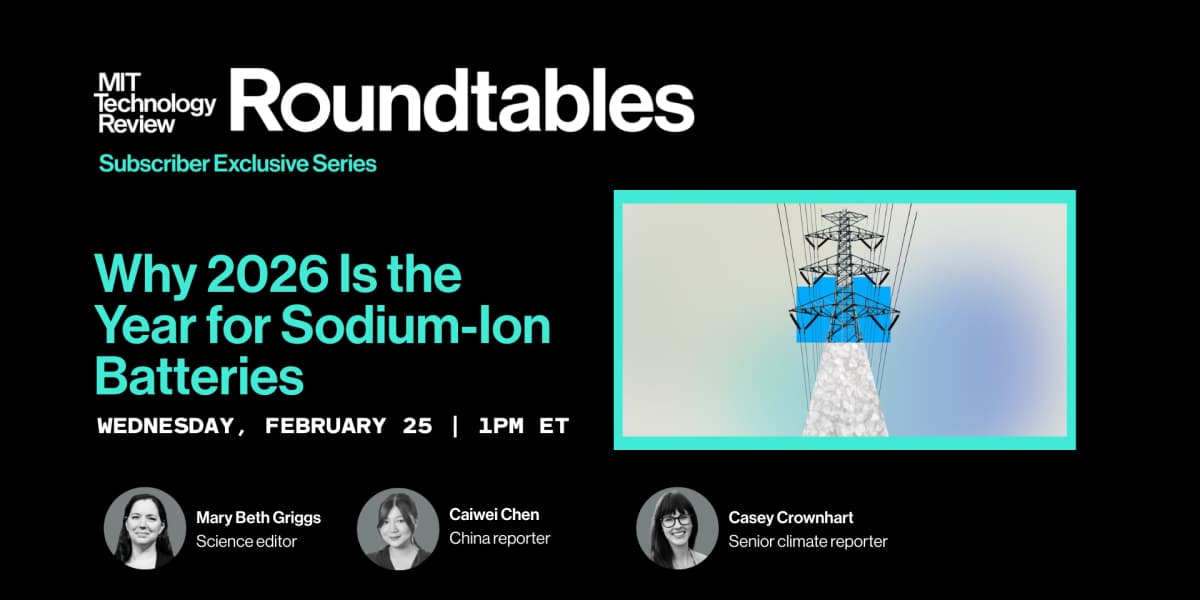
Thesis: In 2026, sodium-ion batteries are reaching a pivotal commercial inflection in which cost advantages and safety improvements are redefining energy-storage use cases—particularly in urban mobility, battery-swap fleets, commercial vehicles, and stationary storage—even as inherent energy-density limits and supply-chain bottlenecks continue to shape adoption trajectories.
Technical Advances Propelling 2026 Commercial Tests
After years of lab-scale innovation, sodium-ion chemistries have begun yielding cell formats and pilot installations that bridge the gap between research and real-world use. Leading the charge, Contemporary Amperex Technology Co. Limited (CATL) reports plans to deploy sodium-ion cells in battery-swap systems and multiple vehicle segments in 2026. At its December 2025 supplier conference, CATL confirmed a next-generation sodium-ion design achieving roughly 175 Wh/kg and a projected driving range exceeding 500 km in passenger-EV applications (CATL reports). The company also asserts that this cell passed China’s GB 38031-2025 safety standard, marking it as the first sodium-ion unit to secure such certification.
Parallel breakthroughs have emerged from academia. In February 2026, a team at the University of Surrey described a “wet” sodium-ion cathode that retains bound water molecules, storing nearly twice the charge capacity of conventional solid-state designs and delivering rapid charge rates with stable cycling over hundreds of iterations (University of Surrey researchers reported). Meanwhile, innovations in Prussian-blue and polyanion-type cathodes, hard-carbon anodes, and fluorine-free electrolytes have collectively improved thermal tolerance, enhanced safety profiles, and reduced reliance on critical minerals.
Remaining Technical and Scale Constraints
Despite encouraging energy-density gains, sodium-ion cells still trail the 250–300 Wh/kg benchmarks achieved by premium lithium-ion variants. This density gap constrains sodium-ion’s viability for long-range consumer EVs and high-power electronics. At 175 Wh/kg, the chemistry is more naturally suited to urban-range vehicles, where typical daily driving distances remain below 200 km.
Translating lab-scale cathode breakthroughs into multi-GWh manufacturing lines remains a nontrivial challenge. A November 2025 announcement from Pret (a pseudonym for an established battery supplier) outlined a CNY 800 million investment in a 6 GWh sodium-ion plant slated for 2026 commercial production (Pret announced). Yet ensuring consistent quality across Prussian-white derivative precursors and hard-carbon feedstocks will require robust process controls and supply-chain coordination. Recycling pathways for spent sodium-ion modules are also less mature than those for lithium-ion systems, presenting potential end-of-life and regulatory hurdles.

Commercial Mobilization and Market Uncertainty
The convergence of supplier commitments, pilot deployments, and investor attention has elevated sodium-ion batteries into mainstream technology discussions. Industrial players such as Sinopec and LG Chem forged partnerships in late 2025 to develop proprietary sodium-ion cathode materials, while tier-one OEMs are publicly mapping sodium-ion formats to distinct applications—battery-swap fleets in China, commercial vans in India, and behind-the-meter storage in Europe.
Market forecasts vary substantially and hinge on successful scale-up. Precedence Research estimates a global sodium-ion market of approximately $1.66 billion in 2026, potentially rising to $6.83 billion by 2034, contingent on cost-competitiveness and lifecycle performance (Precedence Research projects). Roots Analysis projects a range from $566 million in 2026 to $10.7 billion by 2040 at a 23% compound annual growth rate, assuming broad adoption in grid storage and lower-tier EV segments. These forecasts, however, presuppose steady feedstock supplies, stable precursor costs, and timely regulatory approvals in key regions.
Use-Case Window: Where Economics Shine
By diagnosing the cost-safety-density trade-space, organizations can pinpoint where sodium-ion is most likely to deliver value. Segments that prioritize raw-material affordability, simplified thermal management, and regulatory ease—such as budget BEVs, urban taxi fleets equipped with battery-swap architectures, and commercial delivery vans—align closely with the attributes of current sodium-ion cells. In cold climates, third-party testing (industry analysts report) has shown sodium-ion modules outperforming certain lithium chemistries at sub-zero temperatures, owing to electrolyte formulations that remain conductive at –20°C or below.
In stationary storage, safety-first environments—microgrids at remote industrial sites, behind-the-meter residential backup, and short-duration grid-resilience installations—place less emphasis on peak Wh/kg and more on levelized cost of storage. Here, commodity sodium salts and hard carbon anodes offer competitive per-kWh pricing estimates that, if validated at scale, could undercut lithium-ion on total lifecycle economics.
Persisting Barriers in High-Density and Global Approval
Sodium-ion’s energy density ceiling remains the fundamental limiter for high-range transportation and aerospace battery platforms. Premium lithium-ion cells routinely exceed 300 Wh/kg in laboratory conditions and are trending toward 400 Wh/kg in packaged modules, a performance envelope sodium-ion has yet to approach.
Regulatory frameworks also diverge globally. While Chinese regulators have fast-tracked sodium-ion certifications under GB 38031-2025, EU and U.S. transportation standards require independent third-party validation (industry observers note). Major OEMs outside China are thus monitoring both domestic and international pilot metrics—cell degradation rates, thermal runaway thresholds, shipping compliance—to gauge when sodium-ion might satisfy multi-jurisdictional criteria. Meanwhile, geopolitical concentration of upstream IP and precursor capacity in a handful of suppliers could introduce strategic supply-chain vulnerabilities for fleet operators and OEMs seeking diversification.
Human and Strategic Stakes Behind the Inflection
This sodium-ion moment carries implications beyond technical milestones. For emerging economies and energy-access initiatives, a lower-cost, lower-raw-material-intensity storage solution can expand mobility and off-grid electrification without deepening dependence on critical-mineral supply chains concentrated in a few regions. For large fleet operators, battery-swap or parcel-delivery services, a more tolerant safety profile eases operational risk management in urban environments.
Yet the same dynamics evoke questions of power and agency in the global battery landscape. If sodium-ion scale-up remains anchored to a narrow set of IP holders and precursor producers, new challengers may find it difficult to penetrate the market. Conversely, open-source cathode research and commodity salt feedstocks could democratize access—provided that downstream manufacturing and certification processes evolve in parallel.
Recommended Actions (Advisory)
- Consider pilot deployments in applications aligned with current sodium-ion strengths, such as urban BEVs with daily mileage under 200 km and stationary storage scenarios prioritizing safety over energy density.
- Monitor emerging precursor capacity announcements and third-party safety validation reports in key regions (China GB 38031-2025, EU UN 38.3, U.S. UL 2580).
- Model lifecycle cost scenarios that include material sourcing, certification timelines, and end-of-life recycling processes to compare sodium-ion against LFP/Li-FePO4 benchmarks.
Diagnostic Bottom Line: The 2026 sodium-ion inflection is real but circumscribed. Cost and safety gains have unlocked specific commercial windows—urban fleets, budget EVs, and short-duration storage—while energy-density limits, precursor scaling, and multi-jurisdictional approvals remain gating factors. How rapidly the technology migrates beyond pilot fleets and microgrids into broader markets will depend on whether reported lab advances translate into consistent, multi-GWh manufacturing, and how supply chains and regulators respond to this emerging dual-star energy-storage dynamic alongside lithium-ion.