Executive summary
Investor behavior matters more than check size for early-stage startup outcomes: hands-on fit with investors shapes hiring, governance, and time-to-value.
- Impact: When operational backup from investors ranks higher than a marginally larger check, founders can align team dynamics and mitigate governance deadlocks.
- Why it matters now: Drawing on work with hundreds of pre-seed and seed companies, General Catalyst’s Yuri Sagalov reframes fundraising trade-offs around investor engagement rather than capital alone.
Key implications
- Sagalov suggests that hands-on investors who actively support recruiting and go-to-market work deliver higher operational value than passive check-writers or micromanagers.
- He argues that conversations with current and past portfolio founders can reveal consistent patterns of investor behavior under stress.
- According to Sagalov, a slight co-founder equity imbalance—plus or minus one share—creates a low-friction deadlock-breaker without complex clauses.
- He observes that early hires motivated by mission over compensation help set culture and reduce churn when budgets are tight.
Investor engagement as a first-order factor
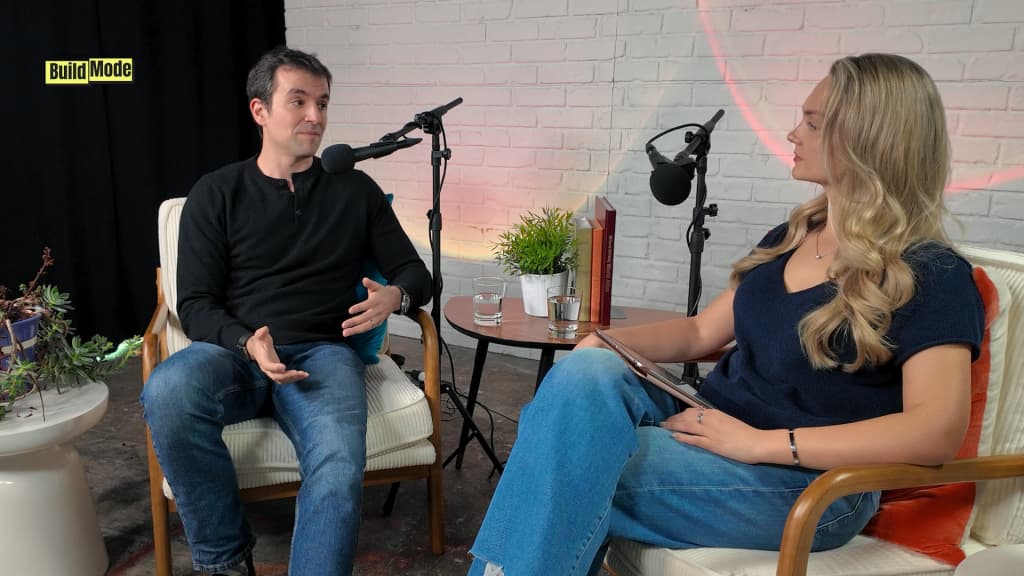
On the season two kickoff of Build Mode, Sagalov classifies venture partners into three behavioral archetypes: hands-on collaborators, passive check-writers, and micromanagers. He posits that founders who prioritize hands-on collaborators gain operational leverage that can outweigh the financial difference of a marginally larger round—though this claim rests on anecdotal evidence from the podcast rather than broad quantitative data.
Sagalov attributes recurring early-stage stalls to mismatches in investor involvement, noting that founders often report waiting for support rather than running out of cash. This pattern suggests that investor behavior can accelerate or stall go-to-market efforts more decisively than extra runway.

Governance mechanics and deadlock trade-offs
Sagalov highlights the governance risk of equal 50-50 co-founder splits, pointing to cases where perfect parity led to impasses. A deliberate one-share tilt, he contends, establishes a built-in tiebreaker and reduces reliance on external arbitration. He qualifies that this minimal imbalance isn’t a substitute for vesting schedules or buy-sell agreements but can simplify board deadlock scenarios in early cap tables.

Culture fit in early hires
The podcast frames the first five to ten employees as “missionaries”—contributors drawn by the startup’s mission rather than immediate compensation. Sagalov argues this dynamic aligns motivations when budgets are constrained and fosters a payoff structure where cultural commitment compensates for lower initial pay. He warns that verbal assurances can create unmet expectations if not formalized.
Comparative context and trade-offs
Against the default of “take the largest check,” Sagalov’s framework reframes fundraising as a joint operational decision. Compared with choosing controlling or overly opinionated partners, he warns that governance drag can undercut speed. While accelerators or angel syndicates may offer recruiting support, Sagalov underscores that each model requires founder-led verification to assess fit.

Implications and likely trade-offs
- Founders emphasizing investor operational support may face smaller checks but potentially faster market execution.
- Lean governance fixes like share-tilt deadlock breakers reduce upfront complexity yet retain the need for formal governance instruments.
- Recruiting mission-driven early hires strengthens culture at the cost of elevated risk if promises aren’t contractualized.
- Due diligence with portfolio founders can surface honest investor patterns but may reflect positive bias and selective memory.
Throughout season two of Build Mode, Sagalov’s thesis—that investor behavior outweighs check size—connects fundraising, governance, and talent decisions under a unified structural insight. This perspective shifts early-stage trade-offs from capital maximization to operational alignment.