TechCrunch Founder Summit’s Structural Shift
TechCrunch’s 2026 Founder Summit marks a deliberate move away from polished keynote addresses toward candid, slide-free sessions that center practitioners’ lived experiences. Rather than amplifying prepackaged narratives, the event’s new format underscores a growing industry demand for unvarnished peer conversation on topics such as revenue scaling, fundraising pivots, team rebuilds and international expansion. This shift signals a broader redefinition of who commands authority on the spotlighted stage—and how audience meaning is created.
From Keynote Stages to Roundtable Circles
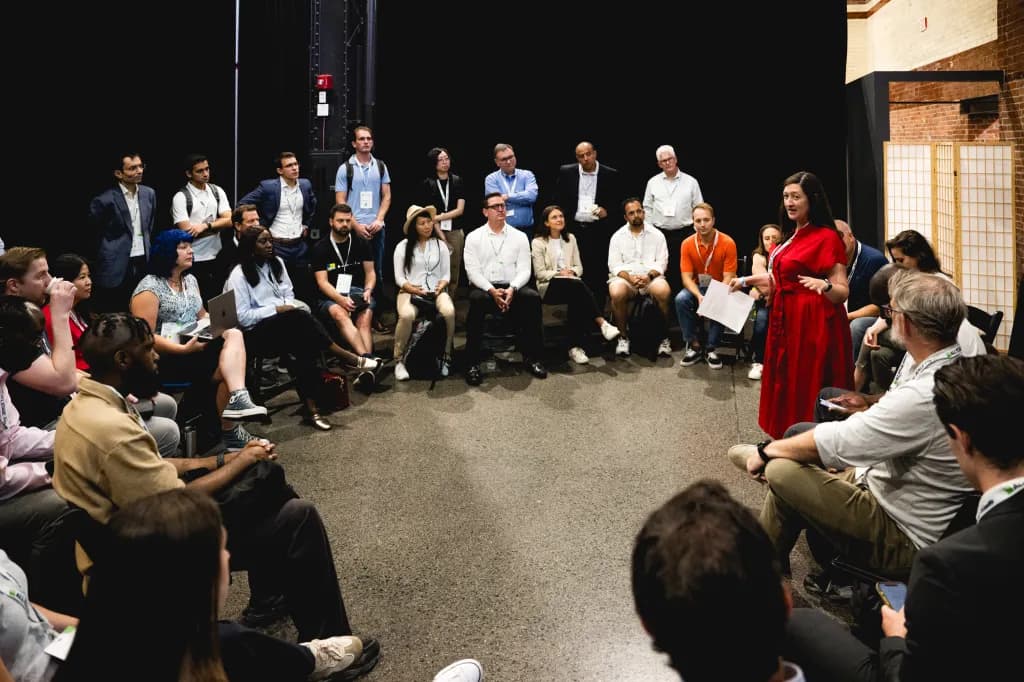
Historically, conference organizers have entrusted keynote speakers with framing each day’s overarching themes. Those polished presentations—complete with custom decks and stagecraft—projected control and elevated individual visibility. The 2026 Founder Summit, however, explicitly recruits experienced founders, VCs and operators to lead 30-minute, slide-free roundtables and breakout discussions. This format decision reframes authority as collaborative, privileging interactive dialogue over top-down instruction.
Who Gains Visibility—and at What Cost?
Organizers anticipate hundreds of founders and investors gathering at Boston’s SOWA Power Station on June 9, creating a networked context in which speakers’ operational stories resonate. Yet visibility in this environment comes with tradeoffs. On one hand, those who can recount specific metrics—say, reducing customer acquisition costs by a measurable percentage or accelerating annual recurring revenue growth within a defined timeframe—are more likely to secure speaking slots. On the other, the compact, unscripted nature of each session leaves little room for nuanced narrative development. Speakers risk being defined solely by headline figures and may face intensified scrutiny or follow-up inquiries after broad editorial amplification.

Examples of Favored Narratives
- “How we grew ARR from $0 to $20 million in 18 months”
- “Rebuilding a team of 50+ after a hypergrowth plateau”
- “Navigating a Series B fundraise during market downturns”
These story types illustrate the Summit’s preference for concrete case studies. The emphasis on replicable tactics over conceptual overviews aligns with a broader industry appetite for immediately applicable insights.

Tradeoffs and Human Stakes
Candid, slide-free discussions reallocate narrative control from stage production teams to individual contributors, reshaping the power dynamics of conference storytelling. Founders and operators who embrace this change must reconcile the potential for earned editorial reach with the vulnerability of exposing unglossed challenges. For those mid-fundraise or managing sensitive hiring efforts, the implicit publicity pact carries reputational implications that extend beyond a single session. Participants become both storytellers and characters in a public narrative shaped by audience reactions and TechCrunch’s editorial framing.
Competitive Context in Tech Events
The Founder Summit’s format stands in contrast to more traditional gatherings like SaaStr Annual or Collision, where keynotes and formal presentations remain central. By intertwining session narratives with TechCrunch’s editorial and social channels, the Summit positions itself as a hybrid media event—part conference, part content pipeline. This approach blurs the line between live dialogue and ongoing media coverage, reinforcing the Summit’s role in shaping industry discourse year-round.

Implications for Future Conference Design
TechCrunch’s shift reflects a broader recalibration of conference authority: from solitary visionaries onstage to collective expertise in the room. As practitioners increasingly seek spaces where vulnerability and authenticity carry as much weight as slide-driven polish, other events may feel pressure to experiment with similar formats. The Founder Summit thus emerges as both a mirror of current industry tastes and a potential catalyst for redefining how professional gatherings confer credibility and community standing.