Executive summary – what changed and why it matters
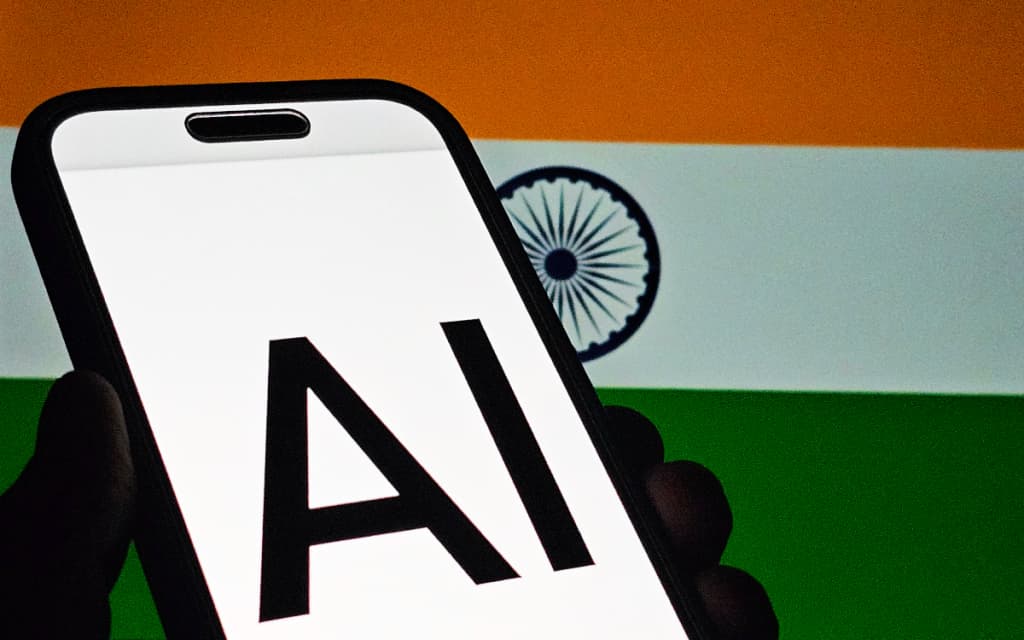
India used a four‑day AI Impact Summit as a concentrated bid to become a major AI investment and hardware hub: 250,000 visitors, C‑suite leaders from OpenAI, Google, Microsoft, Nvidia and Anthropic, and new locally built products including Sarvam Kaze smartglasses and indigenous 30B/105B models. The substantive change is practical: public and private commitments (new offices, compute deals, GPU expansion, and a $1.1B state VC fund) shift India from promise to operational posture – but policy and safety guardrails remain thin.
Key takeaways
- Scale and signal: Summit expects ~250,000 visitors and hosted CEOs (Sam Altman, Sundar Pichai, Dario Amodei, Demis Hassabis) plus heads of state – a major credibility event for investors.
- Local hardware and models: Sarvam launched Kaze smartglasses and open models (Sarvam 30B, 105B); government unveiled BharatGen Param2 (17B multimodal for 22 Indian languages).
- Compute commitments: OpenAI opened two India offices and a Tata deal for 100MW compute (scalable to 1GW); government plans +20,000 GPUs on top of existing ~38,000 on IndiaAI portal and seeks ~$200B over two years.
- Policy gap: Non‑binding New Delhi Declaration endorsed by 89 parties; civil society warned of missing binding human‑rights safeguards for surveillance and policing uses.
Breaking down the announcement — concrete numbers and capabilities
Straight facts matter for decision makers. Sarvam released two open‑source mixture‑of‑experts models at 30B and 105B parameters plus speech and vision stacks and Indus (a multilingual ChatGPT rival). The government’s BharatGen Param2 is a 17B multimodal model supporting 22 Indian languages. Industry partners named include Qualcomm, HMD, Bosch for on‑device deployment of Kaze.
On infrastructure, the summit produced commitments rather than immediate delivery: OpenAI’s Tata partnership targets 100MW of on‑prem compute with an option to scale to 1GW; Microsoft reiterated a $50B regional pledge across the decade; MeitY plans to add 20,000+ GPUs to a pool that already lists ~38,000.

Operational caveat: model parameter counts and device launches are headline metrics; real adoption depends on benchmarks (latency, on‑device throughput, battery life for Kaze), interoperability, data residency controls, and commercial licensing that were not fully disclosed.
Why this matters now
Timing matters: this is the first time the global summit series landed in a Global South nation, and India staged it with heavy industry representation to tilt investor attention eastward. The mix of high‑profile CEOs, national leaders (Modi and Macron co‑speaking), and hard commitments signals a shift from policy signaling to capacity build‑out — a chance to attract supply‑chain and device manufacturing anchored in India.

Risks and governance issues
- Policy thinness: The New Delhi Declaration is non‑binding; civil society flagged missing enforceable human‑rights protections for surveillance and policing deployments.
- Execution risk: Promises of GW‑scale compute and $200B in AI infrastructure are multi‑year and capital‑intensive; timelines, procurement paths, and vendor lock‑in remain unspecified.
- Quality uncertainty: New models and Kaze hardware lack independent benchmarks; on‑device performance and privacy tradeoffs are unverified.
Competitive angle — how this fits global sourcing and cloud strategies
India is positioning as an alternative to U.S. and China‑centric AI hubs by offering local manufacturing, multilingual models, and compute incentives. For cloud and enterprise buyers, the practical comparison is between latency, sovereign controls, and cost: on‑prem Tata/OpenAI compute plus local GPUs can reduce data egress and meet data‑locality needs, but public cloud incumbents still dominate mature toolchains and global scaling.
What to watch next
- Independent benchmarks for Sarvam 30B/105B and Kaze smartglasses (latency, on‑device accuracy, battery life).
- Concrete timelines and SLAs for Tata/OpenAI compute (100MW → 1GW) and the stated +20,000 GPU expansion.
- Text of the New Delhi Declaration and whether signatories convert pillars into enforceable procurement or regulatory rules.
Recommendations — who should act and how
- Chief Strategy Officers: Treat India as a strategic sourcing and market opportunity but require verified benchmarks and staged investments tied to deliverables (compute availability, model audits, device certifications).
- Procurement and Legal: Insist on contractual data‑residency, audit rights, and human‑rights due diligence clauses before engaging with public‑private projects launched at the summit.
- R&D/Product Leads: Pilot on‑device workloads with Kaze‑class hardware only after independent performance and privacy testing; preserve portability to cloud models to avoid lock‑in.
- Policy and Compliance Teams: Track the New Delhi Declaration’s conversion into regulation and factor potential surveillance/AI governance gaps into risk assessments for deployments in India.
Sam Altman’s quip at the event — “But it also takes a lot of energy to train a human… it takes like 20 years of life” — is a reminder that talent, governance and measurable outcomes take time. The summit moved India from aspiration to actionable pitch; the next 12-24 months will determine whether the commitments translate into capacity, commercial flows, and accountable governance.