Thesis: Wispr Flow’s Android app release paired with a Hinglish voice model reframes the Indian ASR market by merging cross-app overlays and code-switching specialization, forcing enterprises to reevaluate trade-offs among privacy permissions, performance claims, and multilingual user identity.
Context and the Cross-Platform Power Shift
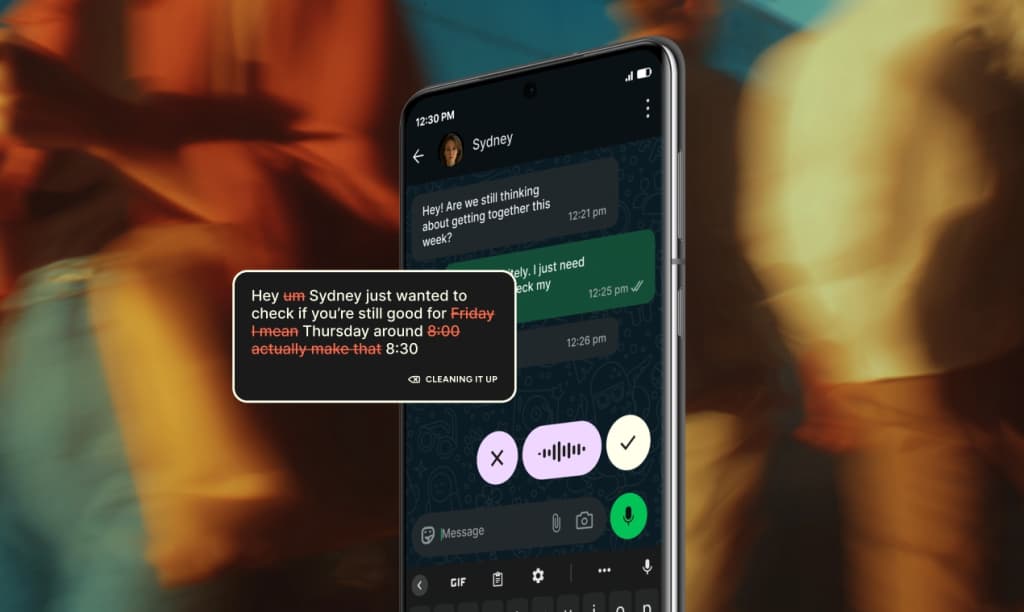
With its latest February 2026 release, Wispr Flow completes its journey from desktop-only and iOS-only dictation to true cross-platform coverage—now spanning Windows, macOS, iOS, and Android. The new Android client adopts a floating “bubble” overlay that inserts dictation text into any app’s text field, in contrast to Wispr’s iOS keyboard extension or desktop hotkey approach. By tapping into over 6,000 Android 13+ models—from foldables to Chromebooks—the rollout signals a strategic pivot: moving beyond locked-down platforms to exploit Android’s overlay permissions for seamless cross-app transcription.
This expansion also introduces a dedicated Hinglish model designed for mixed Hindi-English speech, responding to a code-switching pattern that often frustrates generic ASR engines. Behind the scenes, Wispr Flow cites an infrastructure rewrite that it says delivers roughly a 30% reduction in latency across platforms. These elements—Android reach, Hinglish specialization, and performance gain—converge into a structural moment for ASR in India and other multilingual markets.
Company-Reported Performance and Verification Gaps
Wispr Flow reports that an infrastructure overhaul produced a “30% speed improvement” in dictation responsiveness. To date, this figure remains a company-reported claim with no independent benchmark or third-party test results publicly available. Similarly, early rollout engagement—1.3 million words transcribed in days—is drawn from Wispr’s internal usage logs rather than peer-reviewed adoption data. While these numbers suggest strong initial traction, the absence of external verification leaves open questions around real-world accuracy, latency under load, and how performance holds up once the promised Pro tier imposes usage caps.
Absent industry-standard benchmarks, enterprises and evaluators will need to gauge actual latency and word-error rates against competitors such as Google’s Gboard voice typing or emerging rivals like Typeless. The structural insight here is that performance narratives in ASR—especially in code-switching contexts—depend as much on transparent benchmarking as on headline figures.

Human Stakes in Code-Switching and Identity
The introduction of a Hinglish model speaks to deeper human stakes around language, cultural identity, and user agency. For billions of multilingual speakers in India, effortless transitions between Hindi and English are not a mere convenience but a reflection of everyday communication. Generic ASR models often misinterpret or drop words when confronted with rapid code-switching, leading to user frustration and the perception that technology does not “understand” their language identity.
Wispr Flow’s specialized model aims to bridge that gap, but the structural question remains whether a proprietary ASR engine can capture the full nuance of regional accents, idiomatic expressions, and context-driven vocabulary. Even if early tests by Wispr’s engineers indicate reduced substitution or insertion errors, independent validation will be critical to assess how Hinglish performance scales across diverse user communities and varied network conditions.
Privacy, Permissions, and Compliance Trade-offs
The floating bubble UI requires broad overlay and accessibility permissions—a design choice that amplifies privacy and governance concerns. Any cross-app insertion mechanism must intercept keystrokes, monitor focus changes, and route audio streams through Wispr’s servers for transcription. In enterprise environments, this architecture surfaces questions about data residency, encryption in transit and at rest, and the scope of user consent.
On one level, enterprises will scrutinize Wispr Flow’s data-flow documentation to ensure compliance with sectoral regulations (healthcare, finance) and evolving Indian data-locality rules. On another, individual users may balk at granting an always-on overlay new privileges that go beyond typical keyboard or microphone access. The structural insight here is that overlay-driven ASR must reconcile the tension between fluid cross-app integration and heightened permission scrutiny that can stall adoption.

Competitive Dynamics and Platform Power
On Android, Wispr Flow’s floating bubble competes directly with built-in voice typing in Gboard and OEM-branded voice assistants. By contrast, Typeless—an early Android entrant—adopts a keyboard-based model more akin to Wispr’s iOS integration. Both approaches challenge Google’s default, but Apple and Google remain advantaged by OS-level integrations, brand trust, and embedded privacy protections that limit the need for developers to seek extra permissions.
The deeper structural contention is around platform power: will enterprises and consumers accept a third-party overlay that potentially outperforms native options, or will default settings and perceived safety of first-party solutions dominate? Wispr’s code-switching specialty and cross-app context awareness add differentiation, yet the competition will likely lean on the simplicity and lower permission overhead of built-in services.
Procurement-Era Diagnostic Observations
- Enterprises will likely request third-party latency and word-error benchmarks comparing Wispr’s claimed 30% speed improvement against Google Gboard and Typeless under mixed-language workloads.
- Key metrics to validate include accurate code-switch detection, substitution rates on Hinglish speech corpora, and the consistency of formatting/context preservation across common enterprise apps.
- Data governance teams will probe alignment with India’s Personal Data Protection Bill, looking for clarity on on-device processing versus server-side transcription and retention limits.
- Finance and procurement stakeholders may flag the impact of transitioning from an initial unlimited free tier to a paid Pro model, seeking scenario analyses on usage elasticity and potential churn rates.
- IT security reviews will surface trade-offs between fluid cross-app insertion and the expanded attack surface introduced by overlay permissions.
Regulatory and Governance Implications
India’s evolving data-locality regime and sectoral compliance requirements are set to tighten in the coming year. ASR solutions that route audio to centralized servers must demonstrate compliance with data residency norms, especially in industries like healthcare where patient data is highly sensitive. International enterprises with operations in India will weigh Wispr Flow’s hybrid cloud approach against pure on-device alternatives, mindful that regulatory landscapes can shift rapidly.
The broader implication is that cross-app ASR architectures may trigger new certification needs or trigger government audits—reshaping procurement cycles and vendor risk assessments. In markets outside India, data-sovereignty rules in Europe and Asia may add parallel constraints on cross-border audio processing.

Monetization and Freemium-to-Paid Transition Risks
At launch, Wispr Flow offers unlimited free dictation on Android—departing from its iOS cap of 1,000 words per week. While this aggressive freemium strategy can accelerate testing and early adoption, historical patterns in SaaS show that usage often drops when usage caps or subscription fees are introduced. The structural question is whether users who grow accustomed to unlimited dictation will accept rate limits or tiered pricing, and how quickly churn might erode early engagement figures.
This dynamic also affects enterprise negotiations: CFOs and procurement teams will likely simulate spend scenarios under various usage profiles, seeking contractual safeguards against volatility in consumption.
What to Watch Next
Independent benchmarks of Wispr Flow’s latency and accuracy claims against competitors such as Typeless and Gboard will crystallize performance differentials. Community sentiment on developer forums and social channels will reveal real-world usability, especially among Hinglish speakers. Observers should track Wispr’s privacy-policy updates and data-flow disclosures as it publishes compliance documentation. Finally, retention metrics post-Pro-tier transition will indicate whether the early transcription velocity translates into sustainable user engagement.