Executive summary – what changed and why it matters
Portsmouth’s research framework converts decades of sports-bra anecdotes into precise three-dimensional kinematic targets while uncovering enduring tensions between support and comfort that continue to constrain women’s exercise participation.
- Impact: Up to 74% reduction in measured breast displacement versus no bra; breasts may oscillate over ~10,000 cycles in an hour of slow jogging.
- Who did it: Joanna Wakefield-Scurr’s 18-member Research Group in Breast Health at the University of Portsmouth.
- Why now: surging female engagement in high-impact exercise, maturation of adaptive textile technologies, and active collaborations with garment manufacturers.
- Key unknowns: whether diminishing peak displacement, decelerating velocity, or mitigating “breast slap” most effectively alleviates pain and sustains participation.
Breaking down the findings
For years, sports-bra efficacy relied largely on subjective feedback and two-dimensional analysis. Portsmouth’s lab employed a multi-camera motion-capture system to quantify breast motion in three axes—vertical (inferior–superior), mediolateral, and anteroposterior—during treadmill running. Reflective markers affixed to the torso and on custom chest garments tracked displacement, velocity, and intersegmental impact events, colloquially termed “breast slap.”
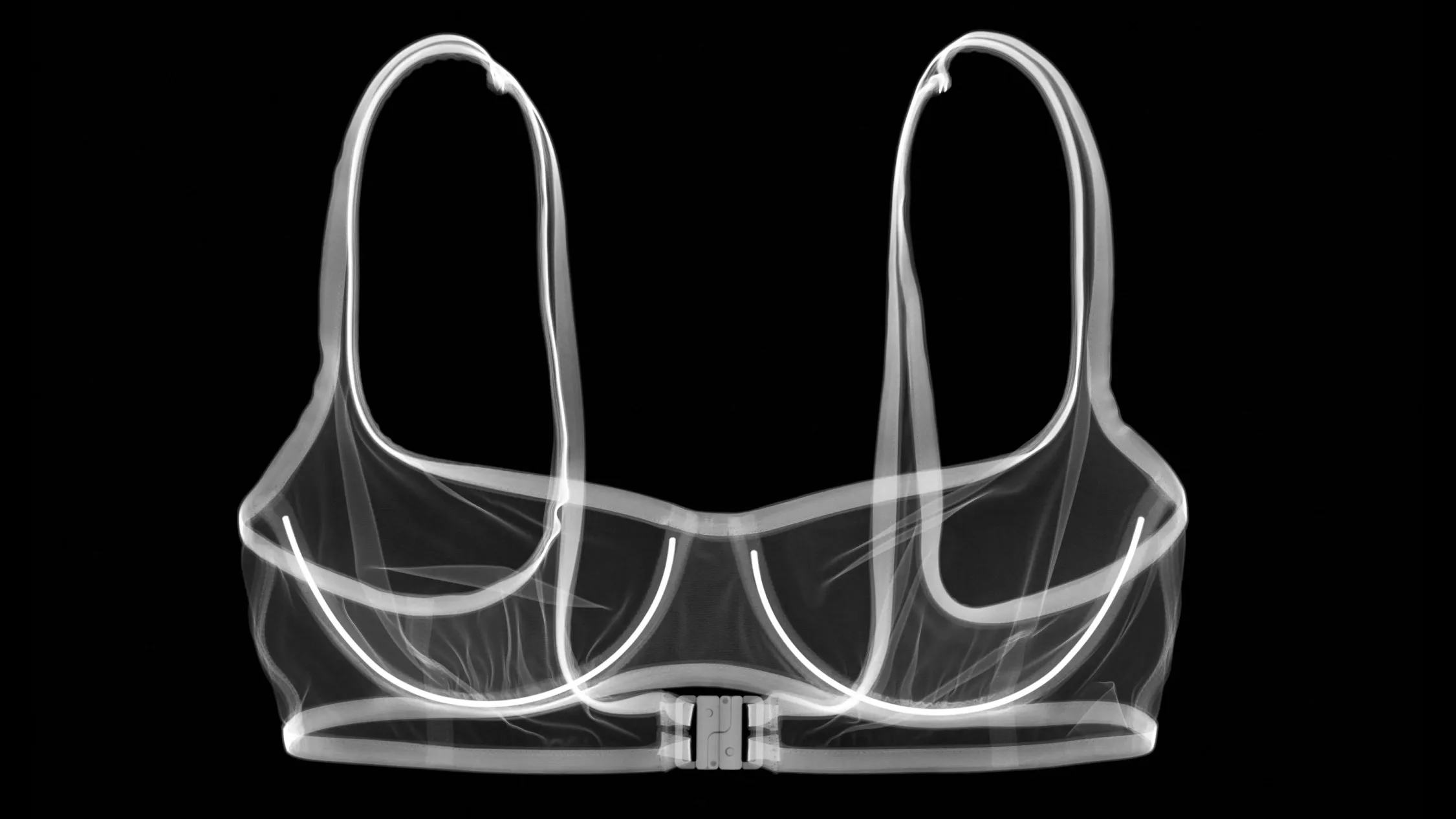
The comparative tests juxtaposed unbraced motion against four structural approaches: basic compression (non-padded, stretch-only fabrics), encapsulation (individual molded cups), hybrid underwire-padded assemblies, and emerging adaptive-textile prototypes. Encapsulation plus adjustable underband, straps, and hook-and-eye closures demonstrated the greatest reduction in three-dimensional displacement—around 74% on average—though peak velocity and impact forces showed more modest declines. Adaptive fabrics, designed to modulate tension dynamically, yielded intermediate performance in preliminary trials.
Historical context and anecdotal roots
Since the 1970s, sports-bra innovations have oscillated between compressive lycra wraps and rigid cup structures, guided by user testimonies about chafing, bounce, and perceived freedom of movement. However, these developments lacked systematic quantification. Early studies relied on two cameras or simple displacement rulers, leaving lateral and depth motions unmeasured. As a result, design priorities often favored subjective comfort or marketing narratives over objective kinematic targets, perpetuating a cycle of trial-and-error.
Wakefield-Scurr’s team built on foundational biomechanics research from the 1990s that illuminated the importance of vertical motion control. By extending capture to three dimensions, the lab exposed previously hidden side-to-side and forward–back oscillations that contribute to impact peaks and tissue strain. This expanded view raises questions about which kinematic dimension most correlates with pain and postural changes.

Why this is happening now
Three converging trends have created fertile ground for this research paradigm. First, female participation in high-impact activities (running clubs, CrossFit, team sports) has grown by double digits in many markets over the past decade, elevating both consumer demand and brand interest. Second, advances in adaptive textile manufacturing enable variable-modulus fabrics that can stiffen under load and relax between strides. Finally, active partnerships between academic labs and sportswear firms have accelerated the translation of lab protocols into vendor R&D pipelines.
These developments not only facilitate rigorous kinematic mapping but also align with broader shifts toward personalized and data-driven athletic gear. Yet the industry remains cautious: adaptive materials often entail higher unit costs and complex supply-chain requirements, and real-world durability under sweat, laundering, and extended wear remains to be proven.
Trade-offs, risks and measurement gaps
The Portsmouth findings spotlight inherent tensions at multiple levels. At the garment scale, increasing underband tightness can curb vertical motion but may impede ribcage expansion, potentially affecting breathing comfort during high-intensity efforts. Straps tightened to limit mediolateral displacement risk concentrated shoulder loading, which in turn may trigger neck or trapezius discomfort. Meanwhile, padded cups and underwire features add weight and bulk, challenging perceptions of natural freedom.
Measurement gaps further complicate the narrative. While displacement reduction is readily captured, the causal link between lower kinematic metrics and subjective pain relief requires outcome-based validation. Does a 20% decrease in peak velocity translate to a clinically meaningful drop in nipple or tissue pain? Are impact peaks (“breast slap” events) more predictive of discomfort than average waveform amplitude? Longitudinal tracking of exercisers, with pain scores and participation rates, remains sparse.
Moreover, variability in breast shape, volume, and ptosis introduces confounding factors. Test cohorts have historically under-represented asymmetrical and larger cup sizes, leaving open questions about scalability. Custom-fitted prototypes in lab conditions may not reflect off-the-rack performance for the broader population.
Comparison to market alternatives
In the current marketplace, sports bras tend to cluster into two legacy strategies. Compression-style models employ high-stretch fabrics to flatten the breast profile, offering simplicity and minimal hardware but often at the expense of breathability and perceived natural shape. Encapsulation bras use stitched or molded cups for targeted control but frequently rely on static materials that lack dynamic adaptation. Consumer reviews indicate that purely compressive styles can feel overly restrictive, while rigid encapsulation without adjustability may lead to shifting under load.
Portsmouth’s hybrid underwire-padded approach leverages both control mechanisms in tandem. The lab data suggest this combination curtails displacement more effectively across three axes, albeit sometimes transferring forces to supportive structures (bands, straps) rather than the breast tissue itself. Adaptive textiles represent a nascent third path—potentially harmonizing low-profile comfort with on-demand stiffness—but their real-world ventilation, cost structure, and durability remain under investigation.
Implications for development and procurement
- Implication for product developers: instrumented prototyping that logs three-axis displacement and velocity can reveal support-transfer patterns, but linking these metrics to comfort outcomes is essential before adopting specific kinematic targets.
- Implication for sourcing teams: adjustable structural elements—underbands, straps, closures—appear critical for broad size-range fit; however, fit algorithms should account for breast ptosis and asymmetry rather than assuming uniform body geometries.
- Implication for supply-chain managers: adaptive textile materials may introduce higher costs and complexity; pilot runs should evaluate wash-cycle resilience, skin compatibility, and production scalability.
Regulatory and ethical considerations
Deploying novel fabrics and integrated sensors in close contact with skin raises questions around allergenicity, flammability certification, and data privacy. Biometric movement data, if captured via wearable sensors, require transparent opt-in policies and secure storage to prevent misuse. Sizing and return policies may need revision to accommodate custom fittings and asymmetric adjustments, challenging standard e-commerce frameworks.
Research and design priorities
- Research priority: conduct longitudinal trials linking quantified kinematic reductions (displacement, velocity, impact events) with validated pain and participation metrics across diverse demographics.
- Research priority: evaluate the relative influence of vertical versus lateral motion control on tissue stress, using finite-element modeling coupled with in vivo sensor data.
- Design priority: explore hybrid assemblies that integrate low-profile adaptive textiles with minimal hardware to balance dynamic support and wearer comfort.
- Design priority: develop size-inclusive parametric models that account for breast asymmetry and ptotic variations in prototype fit testing.
Conclusion
By translating anecdotal concerns into quantifiable three-dimensional metrics, Portsmouth’s work has established a data-driven foundation for next-generation sports-bra design. Yet the enduring human stakes—agency over one’s body in motion, the desire for pain-free participation, and equitable access to fitting solutions—remain contingent on rigorous outcome validation and inclusive prototyping. The pathway from kinematic insight to widespread adoption will depend on deep collaborations between biomechanics researchers, material scientists, garment engineers, and end users to navigate the comfort-support dialectic.