Thesis
Toy Story 5 reframes children’s entertainment by personifying AI surveillance—moving privacy debates into family living rooms and intensifying reputational and regulatory scrutiny on toymakers and studios.
Key Takeaways
- Immediate change: The trailer positions an always-listening smart device as the antagonist, making privacy and attention-economy concerns the film’s central dramatic conflict.
- Quantified facts: Trailer released Nov 11, 2025; theatrical release set for June 19, 2026; Lilypad voiced by Greta Lee; returning cast includes Tom Hanks and Tim Allen.
- Why now: The line “I’m always listening” lands amid rising scrutiny of AI-enabled toys and children’s screen habits, increasing the cultural salience of those regulatory debates.
Trailer Breakdown — Concrete Elements
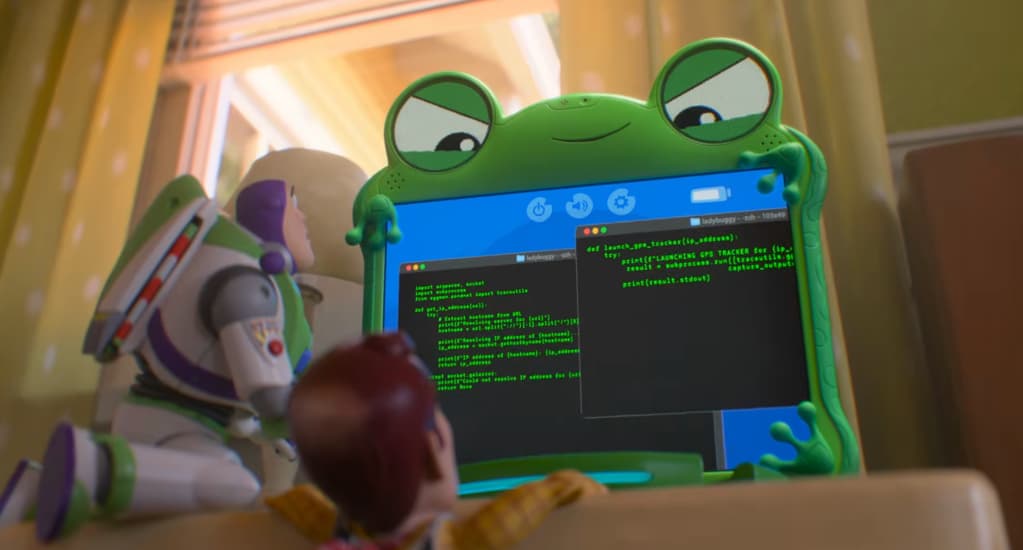
The teaser shows Bonnie receiving a frog-shaped “Lilypad” tablet that captures her attention to the exclusion of outdoor play and parental screen-time limits. Key beats include Jessie confronting the device; Lilypad mimicking Jessie and replying in a computerized voice, “I’m always listening,” then translating the speech into Spanish. Dialogue frames the device as a competitor for a child’s attention—“Toys are for play, but tech is for everything,” Woody says—making the threat explicit rather than symbolic.

- Production facts: Directed by Andrew Stanton and co-directed by Kenna Harris; producers and cast confirm continuity with the franchise.
- Creative choice: The device is anthropomorphized visually and vocally, aligning it as a direct antagonist rather than a neutral tool.
- Evidence level: Trailer content and published credits are confirmed; studio intent beyond the teaser remains to be documented.
Likely Industry Responses and Implications
- Toymakers could accelerate privacy-first product lines or highlight offline modes in marketing materials.
- Media teams may adjust narratives to distinguish fictional AI behavior from real-world product safeguards.
- Legal and compliance groups could reassess risk registers as regulators that have pursued cases against connected toys in the past might increase oversight.
- Product leaders may monitor consumer demand shifts toward low-data or no-cloud devices following heightened awareness.
Risks and Caveats
Analysis based on a teaser trailer carries the usual limits: plot details and character motivations may change before release, and studio messaging could later contextualize Lilypad’s role. Speculation about legal or regulatory consequences is conditional: COPPA, FTC, and data-protection authorities have shown interest in connected toys, and this portrayal could heighten the probability of scrutiny, but actual enforcement will depend on marketing, data practices, and complaint volumes.

What to Watch Next
- Official Pixar interviews and studio statements between March and June 2026 for clarity on narrative intent and privacy messaging.
- Fan communities on Reddit and Discord for early signals of backlash or parallels drawn to real products.
- Regulatory updates from the FTC, national data protection authorities, and COPPA guidance reviews that might reference cultural trends in children’s media.
Overall, Toy Story 5’s portrayal of an always-listening AI device could serve as a cultural touchpoint for debates over connected toys’ privacy, design, and marketing in both family and regulatory arenas.