Executive summary
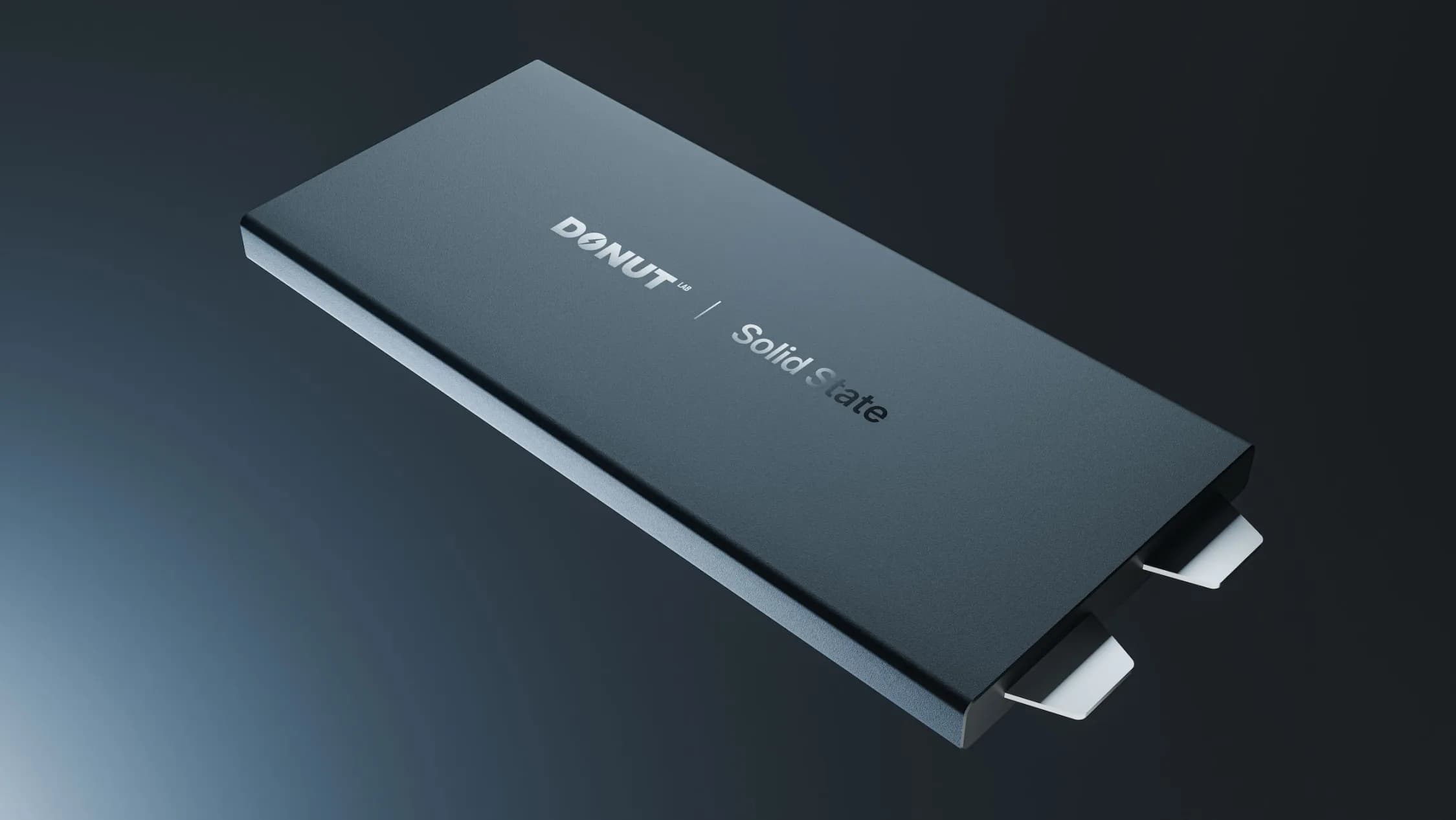
The only independently verified result from Donut Lab is an 11C fast-charge test on a single 26 Ah cell, but the startup’s larger claims—400 Wh/kg energy density, 100,000-cycle lifetime, wide temperature tolerance, and low cost using “green” materials—remain unverified and conflict with established battery trade-offs.
Key takeaways
- Company‐stated breakthrough: Donut Lab asserts a production-ready all-solid-state cell with 400 Wh/kg, five-minute charging, 100,000 cycles, and low-cost “green” materials. Independent validation is currently limited to one fast-charge metric.
- Verified evidence: VTT, a Finnish technical research center, measured a 26 Ah cell charging from 0–80% in approximately 4.5 minutes (≈11C), with notable thermal rise. All other specs lack independent data.
- Missing validations: No cell-level energy density reports from VTT or similar labs; no long-term cycle life tests at the same C-rate; no pack-level thermal performance or safety assessments; no publicly disclosed manufacturing yield or cost analysis.
- Technical tension: High gravimetric energy density, ultra-fast charging, extended cycle life, and low material cost are known to entail conflicting electrode and electrolyte designs.
- Commercial stakes: Premature adoption could expose OEMs, investors, and suppliers to warranty, safety, supply-chain, and financial risks if the technology does not deliver end-to-end performance.
Breaking down the claims and the evidence
Donut Lab’s public materials list these headline specs (company claims in parentheses):
- 400 Wh/kg cell-level energy density (company claims; independent validation lacking)
- Full charge in approximately five minutes (third-party test of 0–80% in ~4.5 minutes on a 26 Ah cell; only one data point from VTT)
- 100,000 charge-discharge cycles at high C-rates (company target; no published long-term cycling data)
- Temperature tolerance with >99% capacity retention from −30°C to >100°C (company assertion; absence of thermal abuse or low-temperature test reports)
- Lower cost using “green” materials and abundant feedstocks (marketing narrative; no cost breakdown or supply-chain audit available)
What VTT’s test proves:
- Fast charge rate: A single 26 Ah all-solid-state cell reached 80% state-of-charge in ~4.5 minutes, equivalent to an 11C rate (VTT report, Feb 2026).
- Thermal response: The test noted a significant temperature rise (unspecified °C increase), signaling potential thermal‐management challenges in larger modules.
What remains untested or unpublished:
- Gravimetric and volumetric energy density measurements under standard cell characterization protocols.
- Cycle life data at the same C-rate, including capacity fade curves over thousands of cycles.
- Module- and pack-level thermal performance, including abuse, overcharge, and environmental stress tests.
- Manufacturing process yield, scalability, and cost per kilowatt-hour.
- Electrolyte composition, electrode thickness, and microstructure details that underpin the performance trade-offs.
Why the claims conflict with established trade-offs
Solid-state battery research has long wrestled with interdependent constraints:
- Energy density vs. ion transport: Achieving >350 Wh/kg typically requires thick electrodes with high areal capacity, which slow Li-ion diffusion. Rapid charging at 11C generally demands thin electrodes or engineered microstructures that reduce gravimetric density.
- Cycle life vs. aggressive C-rates: Sustaining more than 10,000 cycles at high charge/discharge rates usually involves conservative electrode formulations or protective interphases, adding cost or complexity.
- Thermal management vs. power density: Ultra-fast charging generates heat that must be dissipated at the cell and pack levels. All-solid electrolytes exhibit lower thermal conductivity than liquid electrolytes, complicating heat removal.
- Material cost vs. performance: “Green” materials often lack the electrochemical stability or conductivity of established ceramics or sulfide electrolytes, forcing trade-offs in electrolyte thickness or interface engineering.
Industry experts, including academic researchers and battery division heads, observe that no public data address all four constraints simultaneously. Confirmed high‐density cells typically charge at ≤1C or sacrifice cycle life; verified fast‐charging cells rarely exceed 300 Wh/kg; and long-cycle demonstrations often use moderate C-rates or elevated temperatures.
Market context and competitors
Incumbent manufacturers are advancing along incremental paths:
- CATL’s solid-state pilot lines target limited production in 2027, with projected cell densities near 350 Wh/kg and moderate charging rates.
- Toyota’s solid-state roadmap aims for commercial rollout in the early 2030s, balancing density with conservative safety margins.
- Factorial Energy has published 375 Wh/kg cell data but without accompanying rapid-charge or cycle life results in the same package.
- FAW and other semi-solid startups claim >500 Wh/kg but lack independent verification and face integration hurdles.
The gap between Donut Lab’s bold assertions and peers’ partial validations raises questions about the startup’s technology readiness level and go-to-market strategy.

Risks and governance considerations
- Credibility risk: Staged marketing announcements and limited third-party data may inflate downstream expectations, impacting valuations and procurement decisions prematurely.
- Technical risk: Unproven cycle life and thermal management at pack scale could lead to field failures, safety incidents, or warranty liabilities if deployed in vehicles.
- Supply-chain risk: Vague “green” material claims complicate due diligence on sourcing, environmental compliance, and geopolitical exposure.
- Financial risk: Investors allocating capital based on incomplete evidence may face write-downs if performance targets are not met or costs escalate.
- Regulatory risk: Lack of public safety and abuse test data could delay certifications and approvals in key markets.
Potential scenarios for stakeholders
If VTT’s upcoming mid-March report confirms 400 Wh/kg cell density under standardized protocols, OEM roadmaps could shift to include pilot modules with less conservative performance buffers. Conversely, if density results fall below 350 Wh/kg or if subsequent cycle tests show rapid capacity fade, Donut Lab’s roadmap may need reevaluation before any production commitments.
Should independent labs replicate the 11C fast-charge result across different cell formats without excessive temperature rise, supplier specifications for thermal management systems would require revision. If, however, heat spikes exceed safety thresholds in pack-level trials, integration costs and system redesigns could undermine the cost-reduction narrative.
Investors monitoring follow-on funding rounds may assign valuations conditional on the completion of full cycle life tests and manufacturing yield reports. A failure to release transparent cost analyses could prolong fundraising cycles or invite more stringent term sheets.
Bottom line
Donut Lab’s VTT fast-charge result is an important data point in the solid-state battery field, but it does not substantiate the full package of transformative claims. Achieving 400 Wh/kg energy density, five-minute full-cell charging, 100,000 cycles, wide temperature operation, and low cost in a single platform would require breakthroughs across materials, cell architecture, and manufacturing. Without independent, repeatable validation of each metric—especially energy density, cycle life at high C-rates, pack-level thermal behavior, and cost per kWh—the technology remains at an early-stage research level rather than a production-ready solution.