Executive summary – what changed and why it matters
Signals suggest Meta may pursue a collaboration with Prada on co-branded AI glasses. Mark Zuckerberg’s front-row appearance at Prada’s Fall/Winter 2026 show, Prada’s early 2026 extension of its eyewear licensing with EssilorLuxottica, and EssilorLuxottica’s report of over 7 million AI glasses sold in 2025 form a convergence of indicators. If such a partnership materializes, it would propel Meta into the luxury fashion sphere and reshape debates around wearable surveillance, consumer identity, and brand trust.
Key takeaways
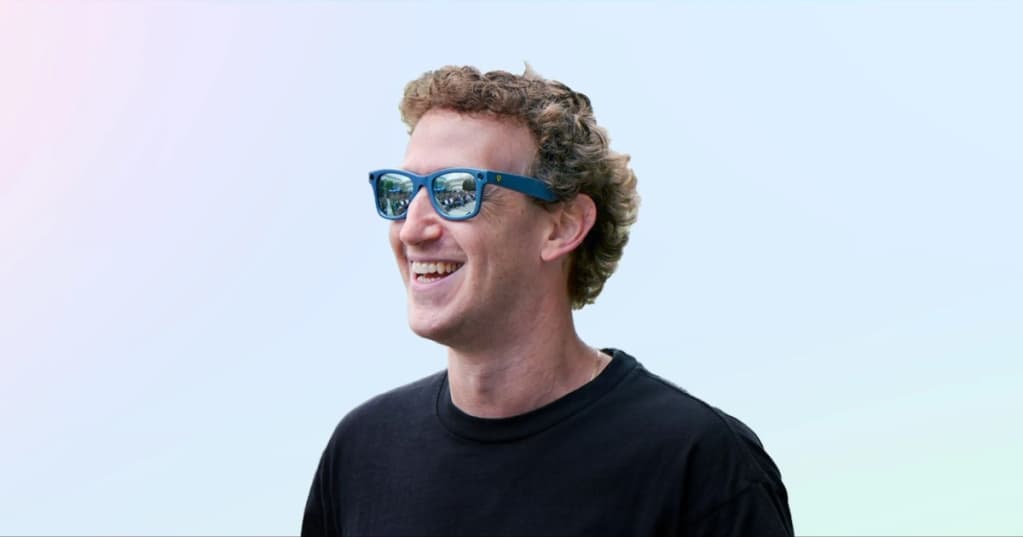
- Zuckerberg’s Milan front-row seat alongside Prada executives is a strong signal of interest; no official Meta or Prada confirmation exists yet (speculative).
- According to EssilorLuxottica’s 2025 report, the company sold over 7 million Ray-Ban Meta and Oakley Meta AI glasses (concrete).
- Prada extended its eyewear licensing deal with EssilorLuxottica through 2030, with a renewable option to 2035—clearing a legal path for Prada-branded frames produced by EssilorLuxottica (concrete).
- A formal Meta-Prada co-branded device could leverage these factors, but would amplify privacy, regulatory and brand-alignment challenges (speculative).
Concrete evidence vs. speculative signals
Concrete:
- Prada announced in early 2026 that it extended its eyewear licensing agreement with EssilorLuxottica through 2030, renewable to 2035.
- EssilorLuxottica’s 2025 financial report states over 7 million AI-enabled Ray-Ban and Oakley glasses sold, up from roughly 2 million in 2024.
Speculative:
- A formal Meta-Prada co-branded AI glasses product (speculative).
- Zuckerberg’s conversation with Prada executives in Milan as evidence of imminent deal-making (speculative).
- Prada’s reported discussions with EssilorLuxottica on “Prada Meta” smart glasses, based on comments from Prada’s CMO Lorenzo Bertelli in November 2025 (reported by CNBC; speculative).
Context: luxury fashion meets wearable technology
The intersection of high fashion and consumer electronics has long been marked by tension between design identity and technological functionality. Luxury houses such as Hermès have lent their cachet to smartwatches, while tech companies have sought fashion credibility via label collaborations. Meta’s 2023 partnership with EssilorLuxottica for Ray-Ban Meta and Oakley Meta positioned the social-media giant in the affordable lifestyle and sports segments. Yet a gap remains in the high-fashion arena—a space where brand narrative and consumer self-expression carry heightened social meaning.

Prada, with its legacy of avant-garde design and strong association with aspirational identity, represents such a space. A co-branded AI eyewear line would not only signal Meta’s ambition to extend its hardware portfolio into luxury retail but also raise questions about how wearable devices reshape notions of agency, self-presentation and personal data sovereignty.

Diagnostic implications
Should a Meta-Prada AI glasses collaboration emerge, several diagnostic scenarios unfold:
- Brand identity fusion: Prada’s curated image of minimalism and craftsmanship could become entangled with perceptions of digital surveillance, risking a dilution of the fashion label’s aura of exclusivity and creative autonomy.
- Consumer trust dynamics: High-fashion consumers often prize heritage and artisanal narratives; the integration of always-on sensors or facial-recognition features could provoke anxiety over data collection, undermining emotional purchase drivers.
- Regulatory flashpoints: Jurisdictions such as the EU and UK have increasingly stringent rules around biometric data and facial recognition. A luxury smart-glass product could become a test case for cross-border compliance, raising stakes for policymakers and brands alike.
- Market segmentation: A Prada-branded device might command premium price tags that extend Meta’s average selling price, but success would hinge on consumers’ willingness to reconcile fashion status with potential privacy trade-offs.
Stakeholder risks and social stakes
The introduction of luxury AI glasses carries multifaceted risks that resonate beyond product performance and into the realms of personal autonomy and societal power dynamics:

- Privacy backlash: Reports of consumers physically disabling home surveillance cameras and apps designed to detect nearby Meta glasses exemplify a growing mistrust of wearables. A luxury release could amplify protests if perceived as normalizing pervasive observation.
- Facial-recognition debates: Any suggestion that co-branded glasses incorporate on-device face ID or recognition tools would likely draw regulatory scrutiny and activist campaigns. Public dialogue around biometric tracking in public spaces has become politically charged, with NGOs and civil-rights groups calling for bans.
- Brand misalignment: Prada risks alienating core clientele if its identity becomes linked to intrusive technology. Conversely, Meta could face intensified skepticism from privacy-sensitive users, potentially eroding brand trust and social-media engagement.
- Technical constraints: Integrating advanced AI functions—voice assistants, real-time translation, object recognition—into a luxury eyewear form factor demands solutions for battery longevity, heat management and weight. Delays or compromises could tarnish both brands’ reputations for quality.
Broader industry implications
A Meta-Prada partnership would reverberate through the consumer-tech and luxury-fashion ecosystems:
- Competitive repositioning: Apple and Google’s smart-glasses efforts have remained experimental or developer-focused. Meta’s luxury play could pressure them to accelerate consumer launches or seek their own fashion alliances.
- Manufacturing models: EssilorLuxottica’s scale in producing over 7 million AI glasses in 2025 illustrates that hardware supply chains can support mass adoption. Yet scaling into luxury small-batch runs—limited-edition frames, artisanal finishes—requires different operational agility.
- Retail ecosystem: Prada’s global boutique network provides a premium distribution channel that Meta’s existing retail partners lack. This could prompt Apple or Snap to explore similar high-end retail collaborations, reshaping who controls the physical touchpoints of wearable sales.
- Consumer empowerment versus surveillance: Luxury wearables confer status and exclusivity but also embed powerful sensors. The balance between empowering users with seamless connectivity and safeguarding civil-liberties rights will become a pivotal battleground in public discourse.
What to watch next
- Official statements or detailed roadmaps from Meta, Prada or EssilorLuxottica in upcoming earnings calls, especially EssilorLuxottica’s Q1 2026 commentary on branded partnerships.
- Further runway appearances by Meta executives at fashion events and any formal announcements from Prada’s corporate communications channel.
- Regulatory developments in the EU and UK concerning wearable biometric data and facial-recognition rules, which could shape product feature sets and market rollout strategies.
- Shifts in consumer sentiment tracked through social-media monitoring and third-party surveys on wearables privacy perceptions in luxury contexts.