Executive summary – a strategic pivot from specs to partner-driven AI
Samsung’s Galaxy Unpacked on Feb 26, 2026 marked a strategic turning point: the Galaxy S26 series shifts the narrative away from incremental hardware gains toward a multi-assistant, on-device and partner-driven AI ecosystem. While improvements in battery capacity, camera apertures, and the Snapdragon 8 Elite Gen 5 in the Ultra model remain modest, the deeper story is that Samsung is positioning Galaxy AI—powered by Bixby, Google’s Gemini agents, and Perplexity—as the new differentiator, introducing complex governance and operational challenges for buyers, enterprise customers, and developers.
Hardware remains evolutionary but consistent
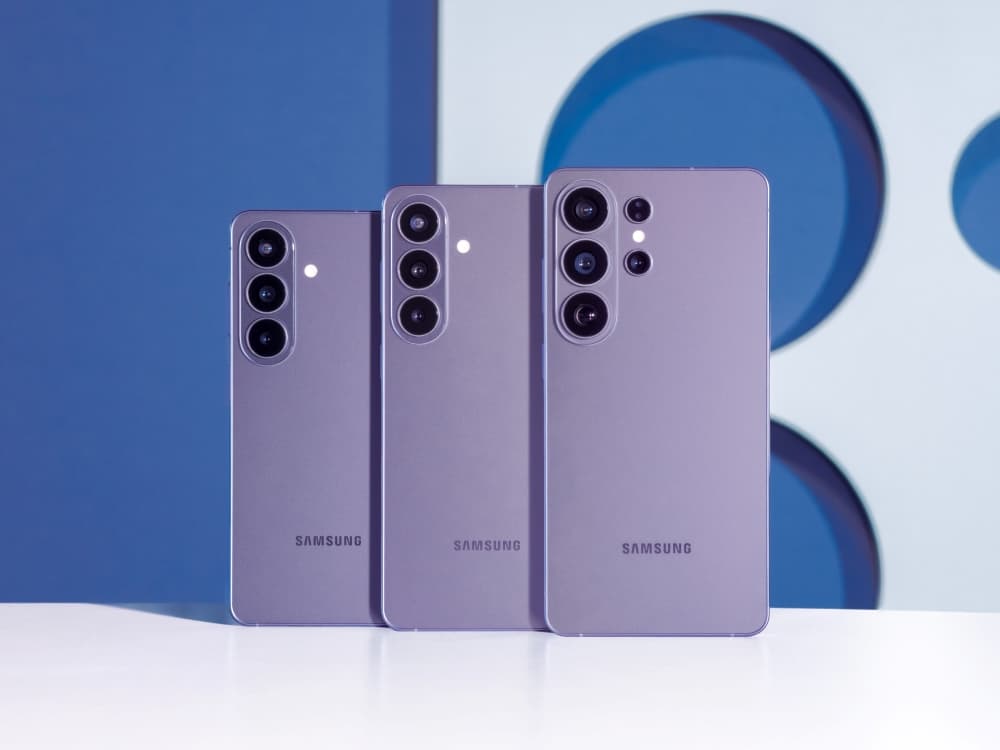
Across the S26 lineup, Samsung retained the visual and ergonomic hallmarks of the S25 generation. The S26 Ultra preserves a 6.9″ QHD+ Dynamic AMOLED 2X display capped at 120 Hz and 2,600 nits peak brightness, while the standard S26 and S26+ offer 6.3″ and 6.7″ FHD+ panels, respectively. All three models run Android 16 with One UI 8.5 and start with 12 GB of RAM—configurations extend up to 16 GB on the Ultra, alongside storage tiers from 256 GB to 1 TB.

Battery capacities increased slightly: 5,000 mAh on the Ultra (supporting 60 W Super Fast Charging to 75 % in 30 minutes), 4,900 mAh on the S26+, and roughly 4,700 mAh on the base S26. Camera arrays saw targeted refinements—200 MP main and 50 MP 5× telephoto sensors on the Ultra (47 % and 37 % more light capture, respectively), while the S26 and S26+ maintain a 50 MP main and 10 MP 3× telephoto setup. Price tags ticked up by about $100 for the S26 and S26+, with the Ultra starting at $1,200.
AI integrations take center stage
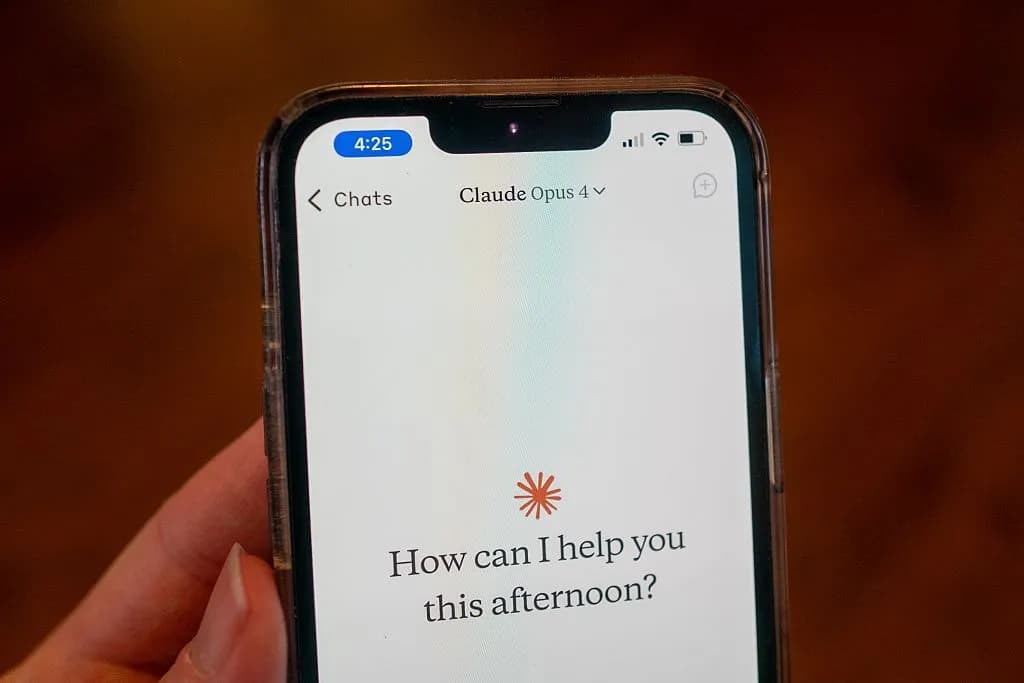
Samsung framed “Galaxy AI” as the centerpiece of the S26 launch, spotlighting three distinct on-device assistants—Bixby, Google’s Gemini agents, and Perplexity—alongside preloaded partner apps and new agent capabilities such as in-app transactions demoed via Gemini. Additional features include Circle to Search multi-object recognition, call screening and summary functions, and an industry-first “privacy display” on the Ultra for masking sensitive notifications or on-screen passwords.

Despite the claims, partner API access and data-routing specifics remain opaque. Samsung’s briefing did not specify where inference occurs for each assistant (NPU vs. cloud) nor the contractual and SLA frameworks governing Perplexity or Gemini integrations. The absence of those details introduces uncertainty around data sovereignty, partner-defined behaviors, and the operational boundaries of agent autonomy.

Industry context — beyond the spec race
Competitors including Apple and Google have been quietly building on-device intelligence and agentic assistants into their mobile roadmaps. Samsung’s willingness to foreground partner-led AI marks a shift away from the traditional spec competition—battery, camera, chipset—to an ecosystem contest over which combination of assistants and back-end services can deliver the stickiest user engagements. This realignment places a premium on governance frameworks, partner negotiation, and cross-service orchestration rather than raw processing benchmarks.
Risks unveiled
- Performance fragmentation: The regional chipset divergence—Exynos 2600 powering S26/S26+ in certain markets versus Snapdragon 8 Elite Gen 5 in the Ultra globally—forecasts split benchmarks, thermal profiles, and AI throughput. Enterprises evaluating device fleets may face inconsistent user experiences and compatibility challenges.
- Data governance complexities: Multi-assistant routing raises questions about data ownership, consent flows, and regulatory compliance as inference hops between on-device NPUs and partner cloud services. The lineage of user queries could cross multiple jurisdictions without clear mappings.
- Developer access uncertainty: The viability of Perplexity/Gemini-driven experiences hinges on partner API documentation and service-level commitments that remain unannounced. Until Samsung clarifies SDK timelines and support terms, third-party developers will navigate ambiguous integration paths.
- Price and upgrade dynamics: With base prices up by roughly $100 and flagship Ultra at $1,200, consumer upgrade cycles—especially in price-sensitive segments—may lengthen. The interplay of higher entry costs and potential performance inconsistencies could depress refresh rates.
Implications for stakeholders
- Product leaders will encounter a bifurcated performance landscape, intensifying demands on roadmap planning, QA processes, and fleet management strategies to account for Exynos versus Snapdragon variants alongside evolving assistant behaviors.
- Security and privacy teams will face expanded data-flow matrices as cellular, on-device NPUs, and multiple cloud partners become intertwined, amplifying the need for comprehensive compliance mappings and dynamic consent mechanisms.
- Developer organizations are poised to operate under rolling uncertainty around Galaxy AI SDK releases, partner API availability, and SLA definitions, shaping the feasibility of agent workflows and fail-safe architectures when partner services degrade.
- Procurement and finance functions will need to reassess total cost of ownership projections, balancing higher upfront prices against anticipated lifecycle extensions and the operational overhead of multi-assistant governance.
What this means moving forward
- Samsung’s publication of detailed Galaxy AI SDK roadmaps and partner API documentation will determine the pace and breadth of third-party integrations across Bixby, Gemini, and Perplexity.
- Independent benchmarking of Exynos 2600 versus Snapdragon 8 Elite Gen 5 for AI inference, CPU/GPU loads, and thermal stability will clarify the real-world impact of Samsung’s regional chipset strategy.
- User feedback on multi-assistant interactions, consent frameworks, and privacy-display effectiveness will surface practical governance gaps and guide enterprise provisioning policies.