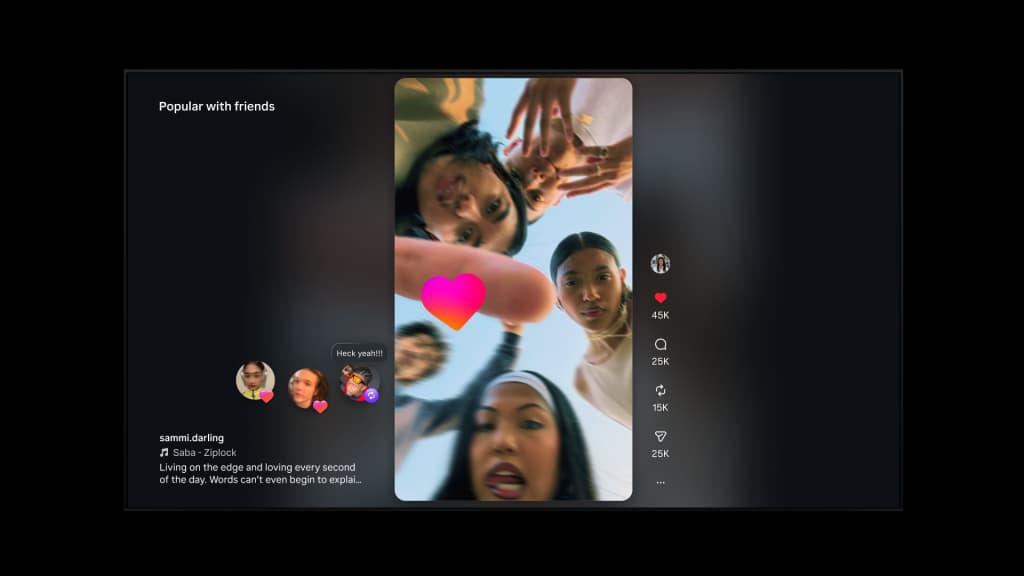
Instagram’s expansion of its Reels experience from phones to Google TV marks more than a platform update—it shifts the balance of social influence, commercial power, and audience agency in the living room. By embedding algorithmically curated short-form video into shared screen environments, Meta is challenging incumbent CTV giants and reframing how households negotiate attention, privacy, and monetization in communal spaces.
From Personal Scrolls to Shared Screens
After debuting on Amazon Fire TV last December, Instagram’s native Google TV app delivers personalized Reels, feed browsing, autoplay channels, and category organization directly to connected televisions. Account pairing for up to five users or a single TV-wide profile adapts mobile-first social behaviors to multi-viewer contexts. Rather than a simple casting extension, the app runs natively on Google TV, optimizing latency, session continuity, and ad insertion potential. This move signals Instagram’s intent to migrate short-form consumption from individual cues—thumb swipes on a handset—to collective, lean-back viewing sessions.
Strategic Stakes in the CTV Short-Form Arena
The core implication of Instagram’s TV pivot is a contestation over living-room influence. YouTube’s established Shorts presence on TVs and TikTok’s experimental integrations have carved out dedicated short-form viewership on big screens. Instagram’s social graph-driven recommendations and Meta ad infrastructure aim to convert mobile scroll time into extended couch sessions and TV ad revenue. Yet this strategy reconfigures stakeholder dynamics in connected-TV—reshaping audience expectations, platform responsibilities, and the terms of creator compensation.
Algorithmic Control Meets Household Dynamics
Shifting a phone-first algorithm into shared spaces introduces new normative tensions. Households accustomed to channel surfing or curated streaming collections now face algorithmic feeds that adapt to group viewing patterns. The balance between individual user profiles and a default TV-wide identity involves trade-offs in personalization, privacy, and consent. Meta’s account pairing feature appears to mediate these tensions, but household profiling on big screens raises questions about data sharing, age gating, and the boundaries of algorithmic influence.

Risk and Governance Considerations
The integration of Reels into CTV environments exposes moderation, measurement, and monetization gaps. Content guidelines designed for personal devices may struggle under the demands of family-friendly viewing. Age-inappropriate or flagged material can surface in living rooms absent robust screening. Similarly, ad measurement systems that track phone-based impressions and viewability are likely to diverge on TV platforms, creating fragmentation in cross-device attribution. Creator revenue frameworks that anchor on mobile views may not translate seamlessly to TV, leaving content producers uncertain about compensation for extended watch sessions.
Regulators and brand safety teams are poised to scrutinize these dynamics. Household consent protocols for data collection could face stricter privacy reviews, and advertisers may press for unified reporting across mobile and TV. The lack of standardized moderation APIs on CTV may invite calls for clearer content controls, while measurement discrepancies risk undermining premium brand investment in short-form ads.
Implications for Key Stakeholders
CTV Platform Owners
Operators of Google TV, Fire TV, and rival platforms are likely to encounter increased requests for digital rights management, ad SDK compatibility, and moderation controls tailored to algorithmic feeds. As Instagram’s native app becomes a fixture in content lineups, platform holders may need to negotiate service-level agreements around uptime, measurement fidelity, and content governance. The prominence of multi-profile pairing on screens intended for group use may spur demands for household consent flows and finer-grained parental controls.

Advertisers and Media Buyers
Brands and agencies seeking to leverage TV short-form inventory may find themselves navigating inconsistent viewability metrics and fragmented attribution across devices. The appearance of Reels in living-room environments is likely to prompt inquiries about cross-screen reporting, creative adaptation for remote-control navigation, and comparative performance against established CTV ad units. Advertisers may press for transparency around ad insertion logic, session lengths, and demographic breakdowns of TV-based viewers versus mobile-only audiences.
Streaming Product and Growth Leaders
Strategists at traditional streaming services may observe shifts in watch-time distribution as short-form sessions extend into living rooms. The emergence of algorithmic Reels channels could catalyze audience fragmentation from longer-form libraries, prompting considerations about content bundling, curation strategies, and competitive positioning. Growth teams are likely to model the impact of mobile-to-TV short-form migration on subscription metrics, session depth, and viewer retention across content genres.
Content Creators and Rights Holders
Video creators whose work populates the Reels algorithm may face uncertainty about compensation and licensing when their clips play on TVs. Existing monetization structures—tied to mobile engagement thresholds—appear to lack clarity for CTV impressions. Rights holders may initiate negotiations over TV-specific revenue splits, usage reporting, and attribution for multi-viewer sessions. The potential for increased reuse of short clips in living-room contexts could fuel discussions about crediting standards and contractual adjustments for broader audience reach.

Broader Consequences for Social Media and CTV
Instagram’s move presages a broader realignment in how social platforms claim space in the living room. As short-form feeds become native TV behaviors, legacy broadcasters and streaming aggregators may encounter competitive pressure to embed algorithmic discovery layers. The boundaries between social video and traditional programming are likely to blur, raising questions about content licensing, brand partnerships, and the cultural meaning of shared screens. Consumers may confront new norms of passive algorithmic consumption, shifting the locus of agency from channel choice to feed curation by platform algorithms.
At the same time, the commercial calculus of TV ad spend is poised for disruption. If Instagram’s auto-play formats and category channels drive prolonged TV engagement, ad dollars may migrate from linear buys and long-form preroll into short-form spots interwoven with Reels feeds. This redistribution of ad inventory challenges existing measurement paradigms and could transform the economics of both social media and streaming television.
Conclusion
By elevating Reels to Google TV, Instagram is not merely extending mobile content to larger screens—it is asserting algorithmic authority over communal viewing spaces. This strategic push recalibrates relationships among platforms, advertisers, creators, and audiences, with lasting implications for governance, monetization, and the social fabric of the living room. As stakeholders grapple with moderation demands, measurement fragmentation, and evolving revenue models, the contest for control over short-form viewing may redefine the contours of digital power on the biggest screen in the home.