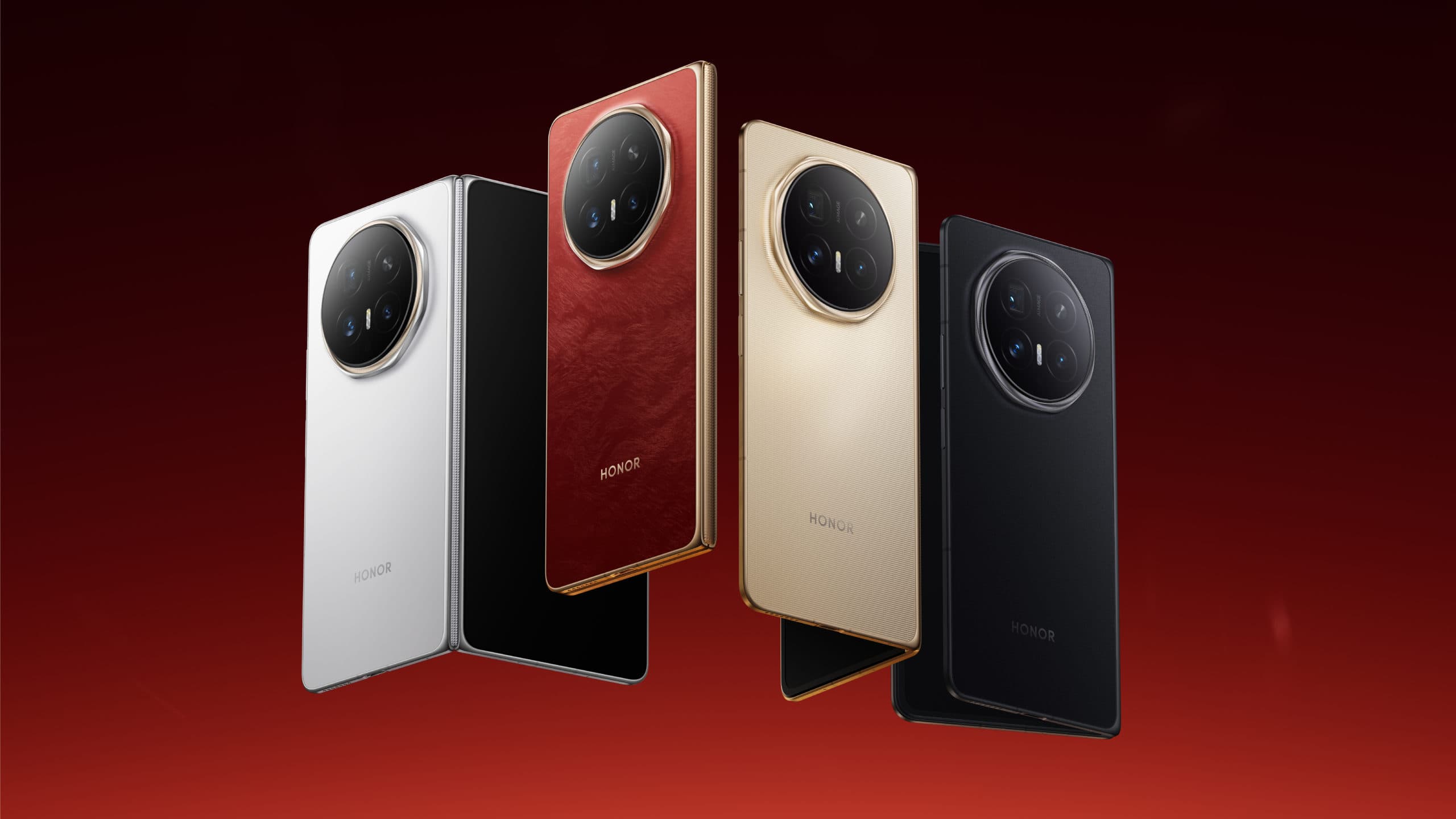
Honor’s Magic V6 launch at MWC 2026 presents a clear strategic pivot in foldable smartphone design: endurance over novelty. By pairing an Honor-claimed 6,660mAh silicon-carbon (Si-C) battery with a 6.7mm unfolded profile, the Magic V6 seeks to resolve a long-standing pain point—battery life—without resorting to the obvious bulk that has defined large-capacity devices.
Executive summary — what changed and why it matters
At MWC 2026, Honor introduced the Magic V6 as its thinnest foldable at 6.7mm when open, yet it retains an oversized 6,660mAh Si-C battery. Honor claims this combination marks the industry’s first attempt to pair a high-capacity pack with a slim, dust- and water-resistant chassis (IP68/IP69). The underlying argument is that foldable design can expand beyond cosmetic drama—creases, bezel-to-bezel displays, and hinge engineering—to address practical longevity.
- Core insight: Honor’s design thesis emphasizes runtime endurance and ruggedness as the defining attributes for its foldable flagship.
- Unanswered questions: Regional pricing, global availability, and independent teardown data are not yet public, leaving validation of endurance, safety, and cycle life open.
- Diagnostic stakes: Enterprise and field users who have historically traded slimness for battery runtime may find the Magic V6 compelling—provided battery chemistry and sealing hold up under third-party testing.
Breaking down the announcement
Honor’s public materials confirm a Snapdragon 8 Elite Gen 5 SoC, a base memory configuration of 16GB RAM and 512GB storage, and a pair of stylus-enabled LTPO AMOLED panels: a 7.95-inch inner display (1–120Hz, 2172×2352) and a 6.52-inch outer screen (FHD+, Honor-claimed 6,000 nits peak). The hinge is reportedly reinforced for IP68 and IP69 water and dust resistance, a rarity in foldables.
The headline feature is a 6,660mAh Si-C battery pack in the standard PNM-AN10 model. Honor suggests an alternate PNM-AN20 satellite-enabled variant carries 12GB RAM, 256GB storage, and possibly up to a 7,150mAh battery in leaked certifications. Honor frames its Si-C chemistry as offering higher energy density and longer cycle life than conventional Li-ion cells, though these benefits remain to be demonstrated in independent safety and degradation tests.

Display enhancements aim to complement the endurance narrative: Honor highlights a crease reduction layer combining ultra-thin glass (UTG) and anti-reflection film to minimize visible fold marks. Under-display 20MP selfie cameras and a conservative rear module—50MP main with OIS, 50MP ultrawide, 64MP 3× periscope—underscore a balanced, practical approach rather than a megapixel arms race.
Honor also cites proprietary RF and power management silicon (Honor C1+ RF enhancer, E2 power chip) to optimize connectivity and charging. The Magic V6 runs MagicOS 10 atop Android 16, continuing Honor’s incremental UI evolution.
Why this matters now
Foldable smartphones have spent years chasing ever-thinner profiles, lighter weights, and unbroken display expanses—often compromising on battery capacity and durability in the process. Early adopters frequently reported multi-hour battery anxiety, hinge fragility, and thermal throttling during sustained tasks. Honor’s Magic V6 reframes this paradigm by elevating runtime as a first-order design criterion.
If Honor’s Si-C battery chemistry and integrated power chips deliver on their theoretical promise, the Magic V6 could redefine acceptable trade-offs in the category. Multi-day operation or full work-day heavy use—video conferencing, mapping, data collection—has eluded most foldables due to sub-3000mAh battery packs folded into narrow chassis. A validated 6,600mAh plus cell could reshape expectations, especially for mobile-first professionals and field technicians who have long juggled separate battery packs or backup devices.
Risks, gaps and what’s still unknown
- Battery chemistry validation: Honor claims Si-C cells offer superior energy density and cycle retention, but only independent teardown reports and long-term cycle tests will confirm actual capacity, degradation curves, and safety margins.
- Sealing integrity: IP68/IP69 water resistance in a foldable is notable, yet hinges and flex cables remain leak points. Warranty fine print and teardown ingress testing will clarify real-world resilience.
- Thermal management: High-end silicon in a slim foldable suggests potential thermal throttling. Sustained benchmarking will be needed to assess whether the Snapdragon 8 Elite Gen 5 can operate at advertised clocks under load without overheating.
- Economics and availability: Honor has yet to disclose regional pricing, channel partnerships, or carrier agreements. The appeal of a larger battery hinges on cost-per-mAh, service networks, and repairability in target markets.
Competitive context
Most flagship foldables—whether from Samsung, Google partners, or other Chinese OEMs—have pursued bezel minimization, ultra-thin frames, or high-megapixel camera arrays at the expense of battery life. Typical inner-fold battery capacities have hovered between 3,800mAh and 5,000mAh, constrained by space and hinge architecture. By contrast, a 6,660mAh pack in a sub-7mm open chassis suggests an endurance-first thesis.
This isn’t the first device to tout silicon-carbon chemistry—predecessors in the EV and consumer electronics segments have promised faster charging and longer lifespans—but the Magic V6 represents one of the first mainstream foldable attempts. Its success or failure could influence whether other OEMs pivot to prioritize runtime or continue the race for slimmer bezels and novel form factors.
What to watch next
- Honor’s regional pricing and rollout schedule: true market impact depends on competitive price-per-unit and service agreements in enterprise channels.
- Independent teardown analyses: confirmation of battery capacity, cell arrangement, and ingress sealing around the hinge.
- Third-party endurance testing: runtime benchmarks, charge-cycle stress tests, and thermal profiling under mixed workloads.
- User and community feedback on crease visibility and IP68/IP69 resilience in real-world scenarios.
- Warranty, repair policies, and component availability: hinge replacements, battery modules, and service-center coverage will influence total cost of ownership.
Conclusion
Honor’s Magic V6 embodies a diagnostic thesis: the foldable smartphone segment may be mature enough to prioritize battery endurance and ruggedness over incremental thinness and camera megapixels. The strategic bet shifts the spotlight from form novelty to functional stamina—an appeal to professionals and power users who have long negotiated grip-and-go power needs. Yet this design pivot hinges on rigorous, independent validation of Honor’s endurance claims, waterproofing seals, and thermal strategy. The ultimate winners or losers in this new foldable paradigm will be defined by data—from teardown experts, benchmark labs, and field reports—rather than marketing bullet points.