Executive summary — what changed and why it matters
Thesis: The Feb. 18 State Department cable marks a renewed strategy to use U.S. diplomacy to prevent regulatory fragmentation that could disadvantage American cloud and AI providers.
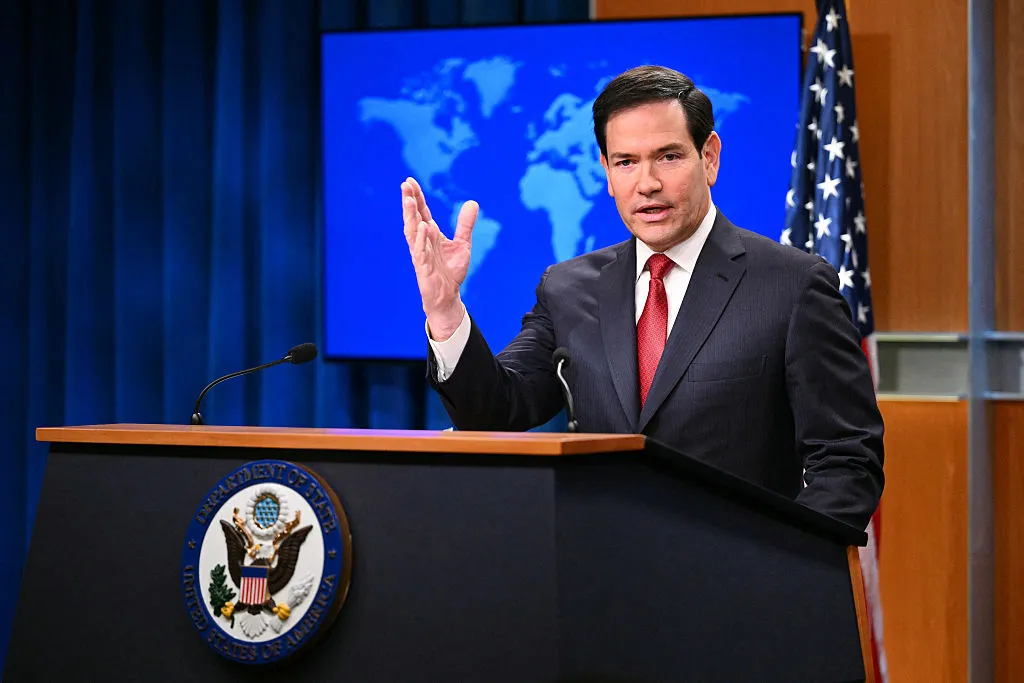
The State Department issued an internal cable directing diplomats to push back on foreign data-localization and “data sovereignty” laws, arguing those rules threaten cross-border data flows, drive up costs, raise cybersecurity risks and constrain AI and cloud services. Signed by Secretary of State Marco Rubio, the cable—dated Feb. 18, 2026—calls on envoys to track localization proposals and promote the Global Cross-Border Privacy Rules Forum as an alternative.
- Substantive change: the U.S. is deploying diplomatic channels to counter national localization mandates that could require local storage or processing of foreigners’ data.
- Immediate impact: cloud and AI vendors may see increased political advocacy on their behalf and potential regulatory pushback from governments emphasizing local control.
- Why now: accelerating global frameworks—GDPR, the EU AI Act and other national laws—have heightened the stakes for U.S. cloud and AI sectors.
Breaking down the announcement
The cable frames localization as a threat to “trusted data flows,” cybersecurity and innovation. It instructs diplomats to counter “unnecessarily burdensome” requirements, track expanding data-sovereignty proposals and promote the industry-led Global Cross-Border Privacy Rules Forum. While consistent with prior U.S. objections to strict sovereignty regimes, the memo marks an explicit diplomatic escalation tied to protecting domestic cloud and AI interests.

Industry context — why timing matters
Since the EU’s GDPR and AI Act, jurisdictions worldwide have sought greater control over data and AI processing via localization rules or stringent transfer mechanisms. For U.S. cloud and AI vendors, seamless cross-border flows underpin training data aggregation, centralized security operations and cost efficiencies. Data localization threatens to fragment these benefits into regional silos.
Potential effects on operators and buyers
The policy shift is political rather than technical. Companies with global cloud dependencies could see a rise in U.S. diplomatic interventions aimed at influencing regulatory outcomes.

- Operational modeling may incorporate localized deployments and compliance costs alongside tracking diplomatic developments that can slow or reshape proposed laws.
- Procurement discussions may emphasize clauses that account for evolving localization mandates and highlight “global reach” as a competitive and political advantage.
- Risk assessments could factor in geopolitical friction—especially critiques of U.S. extraterritorial laws such as the CLOUD Act—and possible customer diversion to non-U.S. providers.
Risks, credibility and governance
The diplomatic campaign may face credibility challenges. U.S. extraterritorial statutes like the CLOUD Act have in the past enabled American authorities to demand access to data held by U.S. companies abroad, undercutting arguments against digital sovereignty. Diplomacy that appears to prioritize U.S. commercial advantage over privacy or security considerations may provoke political reactions from the EU, China and other actors, potentially increasing the likelihood of regulatory countermeasures.
Comparing framework alternatives
The administration is backing cross-border privacy frameworks—such as APEC mechanisms, adequacy rulings and the Global Cross-Border Privacy Rules Forum—as substitutes for localization mandates. These frameworks aim to preserve data flows while imposing controls, a balance U.S. firms favor. Yet mutual trust and enforcement capacity vary across markets, introducing political uncertainty into their adoption.

Projected industry and government responses
- Firms and standards bodies could step up engagement in cross-border certification efforts and allocate resources to the Global Cross-Border Privacy Rules Forum.
- Governments pursuing localization may accelerate drafting of sovereignty laws in response to perceived U.S. pressure, particularly in markets with national security or privacy concerns.
- Diplomatic interventions might spur allied nations to propose adequacy processes, while adversarial states could double down on strict local mandates as a counterstrategy.
What to watch next
Track official State Department and White House statements, EU Commission reactions and legislative proposals in key markets. Observe whether the diplomatic push alters draft laws or simply escalates tensions—both outcomes will shape procurement strategies, risk profiles and the long-term economics of global cloud and AI services.