Executive summary – what changed and why it matters
Rapid U.S. AI data-center expansion is outsourcing worker housing to turnkey man-camp vendors – including those with controversial detention ties – creating an operational and reputational convergence that procurement teams must now manage. Target Hospitality, the operator of the Dilley Immigration Processing Center, has secured roughly $132 million in contracts to build and run a temporary workforce camp in Dickens County, Texas, supporting conversion of a former Bitcoin mine into a 1.6 GW AI data center capable of hosting over 1,000 workers. Legal claims about conditions at Dilley, the ICE family detention center, are contested in court and remain allegations.
Key takeaways
- Scale and cost: Approximately $132 million in combined contracts for construction and operation of a rural workforce camp to support a 1.6 GW data-center conversion.
- Vendor risk: The camp operator also runs a family detention facility facing court filings alleging inadequate food safety, mold, and insufficient accommodations for children’s dietary needs.
- Operational driver: Developers are repurposing modular “man camp” models from oil and mining sectors to meet urgent, remote labor needs for multimonth AI-infrastructure projects.
- Governance exposure: Housing procurement decisions now carry human-rights, reputational, and community-impact risks for data-center developers and their cloud customers.
Breaking down the announcement
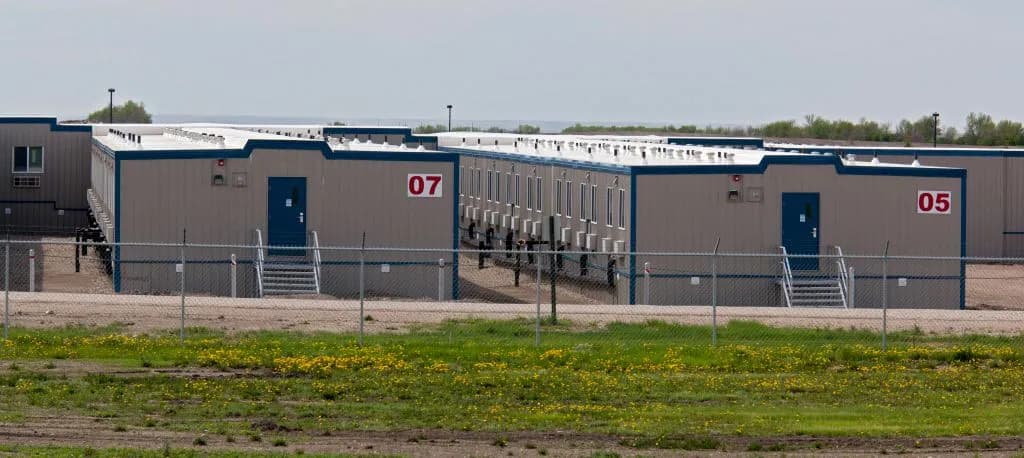
According to reporting by TechCrunch, the $132 million agreement covers both the build-out and the ongoing operation of a modular housing complex in sparsely populated Dickens County. The facility will support civil, electrical, and power-infrastructure work required for converting a decommissioned cryptocurrency mining campus into one of the nation’s largest AI-focused data centers. The man-camp design bundles sleeping modules with shared dining, laundry, fitness, and recreation spaces—a turnkey solution borrowed from decades of oil-field and mining operations in remote regions.
The camp operator’s commercial team has described the current U.S. data-center pipeline as an unprecedented growth opportunity, signaling that private infrastructure firms now view transient-labor housing and logistics as a critical service line in the AI era.
What lies beneath the man-camp model
“Man camps” originated as remote workforce villages for extraction industries, where conventional lodging was unavailable. Over time, specialized vendors built expertise in rapid-deployment utilities, sanitation, and food logistics for transient labor forces. In data-center contexts, these camps aim to compress project timelines by co-locating hundreds—or in this case, more than a thousand—technicians, engineers, and contractors on site. But concentrated workforce villages can also concentrate health, safety, and social impacts—especially when run by firms whose prior contracts include contentious detention facilities.

Why this matters now
AI infrastructure builds are shifting into rural regions with abundant power and land capacity but limited hotel or rental housing markets. With global data-center capacity on pace to double by 2030, the gap between permanent housing stock and short-term labor demand is widening. Observers note that turnkey camps accelerate schedules and reduce upfront capital outlays on local real-estate development. Yet this acceleration externalizes risks onto procurement teams, community stakeholders, and local governments tasked with permitting, oversight, and public engagement.
Governance and community stakes
Procurement decisions in the AI data-center sector now intersect with questions of labor dignity, local agency, and corporate accountability. Vendors operating large-scale camps carry reputational risk: associations with contested detention operations can prompt activist campaigns, customer inquiries, and local political pushback. Concentrated housing of hundreds of workers also amplifies public-health considerations—from food-safety protocols to medical-response readiness—and raises questions about third-party audit transparency.
Community groups in host counties may find themselves without clear channels to address worker grievances or environmental concerns. Meanwhile, cloud customers and downstream enterprise users increasingly factor social-risk profiles into vendor selection. The convergence of remote infrastructure buildouts and high-stakes human-rights scrutiny means that even private-sector data-center projects now face governance expectations reminiscent of large public works.

Trade-offs in housing strategies
Developers weigh the speed and scale of turnkey camps against distributed-housing approaches such as local rentals, hotel blocks, or company-owned modular units sited near towns. Turnkey camps can compress project schedules by centralizing services, but they also concentrate vendor control and heighten single-point-of-failure risks in labor welfare and local relations. Distributed models may slow mobilization and require deeper engagement with municipal housing markets, yet they diffuse social impacts and can foster stronger community integration.
What to watch next
- Regulatory filings or public comments from local authorities in Dickens County regarding permits or community impact assessments.
- Updates from Target Hospitality’s Q1 2026 disclosures on revenue tied to AI data-center housing contracts.
- Any public statements or revised procurement frameworks from major cloud providers that engage third-party camp operators.
Source: Synthesis of public reporting, including TechCrunch (March 8, 2026). Core operational details—such as the $132 million contract size, capacity for over 1,000 workers, and the 1.6 GW facility conversion—are documented. Allegations about conditions at the operator’s detention facility remain under legal contestation.