Thesis
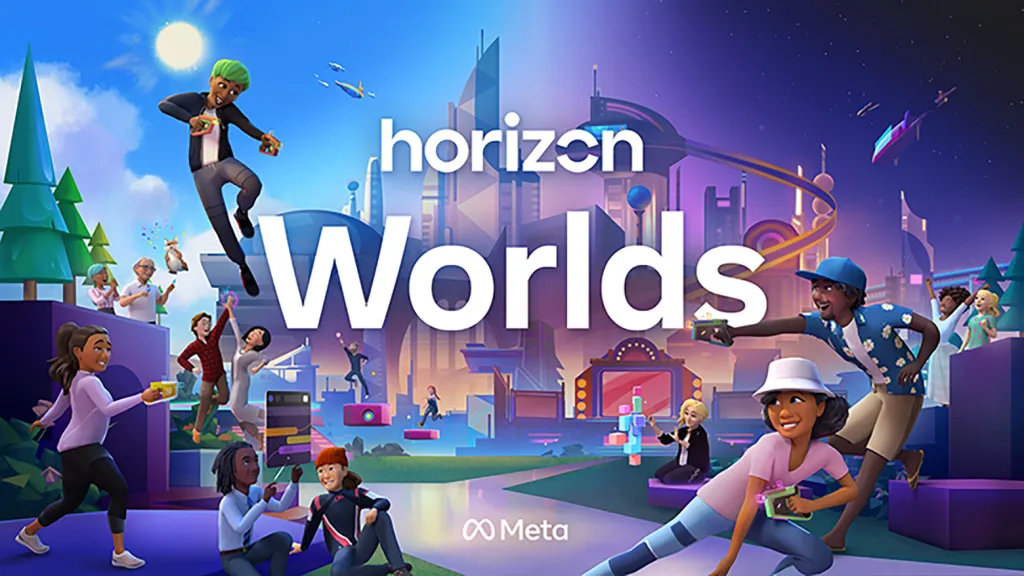
Meta’s shift of Horizon Worlds to an almost exclusively mobile platform marks a decisive retreat from its VR-first metaverse strategy. This move crystallizes a broader corporate pivot: reallocating Reality Labs resources from immersive hardware and in-house content toward AI models, wearables, and scalable social gaming. For developers, operators, and platform stakeholders, the realignment signals profound implications for product roadmaps, budget exposures, and the governance of virtual experience economies.
What changed and why it matters
On February 20, 2026, Meta announced that Horizon Worlds would be explicitly decoupled from its Quest VR ecosystem and repurposed as a mobile-centric social gaming platform. This reclassification follows Reality Labs’ cumulative losses of approximately $80 billion since 2020 and a round of share-wide layoffs—near 1,500 roles, or roughly 10% of the unit. Those financial pressures, coupled with under-whelming user engagement in fully immersive VR, compelled Meta to seek larger addressable audiences via Facebook and Instagram integrations.
- Structural reversal: Horizon Worlds transitions from a core VR metaverse product to a mobile-first social environment.
- Quantified context: Reality Labs deficits (~$80B), ~1,500 layoffs, multiple VR studio shutdowns and ‘maintenance mode’ directives contributed to the pivot.
- Reinvestment corridor: AI model development, emerging AR glasses, and a condensed VR hardware roadmap now absorb Reality Labs capital.
Implications for developers and operators
By designating mobile as the primary Horizon Worlds surface, Meta enforces an SDK and API divergence that will materialize by Q2 2026. Core VR features—hand-tracking gestures, roomscale physics, native Quest storefront placements—are slated for deprecation. Developers who have built experiences around those capabilities will face decisions about repurposing interactive mechanics or rewriting large components for touch-and-tap input.

- SDK fork timeline: Mobile SDK v2.x becomes the default integration by mid-2026, with Quest-only modules entering maintenance mode.
- Feature obsolescence: VR-specific assets (spatial audio loops, hand-presence animations) may lose rendering optimizations, driving potential rework.
- Discoverability shift: Social network insertion points on Facebook and Instagram replace dedicated Quest storefronts, altering monetization levers.
Shifting economics and R&D exposures
Mobile gaming economies offer orders-of-magnitude greater addressable user bases than VR. Meta’s own internal analysis suggests that Facebook–Instagram linkage can yield install volumes ten to a hundred times higher than Quest store conversions. Yet mobile sessions often average minutes rather than hours, and in-app purchase ARPU (average revenue per user) tends to cluster in microtransactions rather than subscription-style content passes. Teams that allocated upwards of 50% of their VR budgets to world-building and haptic ecosystems now face sunk-cost exposure, with returns hinging on expedited mobile adaptation.
- Cost per install tradeoff: VR acquisitions often exceed $20–30 per user, whereas mobile CPI can range from $1–5, shifting ROI benchmarks downward.
- Sunk-cost risk: Long-lead VR content contracts—studio partnerships or vendor pipelines—may lack portability to mobile and require renegotiation or write-offs.
- R&D reallocation: Reality Labs internal budgets are transitioning 30–50% of resource commitments from VR tooling to AI personalization and moderation tooling for large mobile audiences.
Competitive and market context
Reframing Horizon Worlds as a peer to Roblox and Epic’s Fortnite social spaces leverages Meta’s 2–3 billion social logins advantage. However, retention mechanics in those incumbent ecosystems—creator royalties, long-tail economies, user-driven content pipelines—present entrenched barriers to entry. Meta’s core strength in social graph data could boost discovery, but translating that reach into sticky in-app behaviors and creator earnings remains a challenge.

- Distribution vs. retention: Immediate user reach through social feed promotion may not equate to daily active usage if content mechanisms lack depth.
- Creator economics: Existing platforms offer established revenue-share models; Meta’s nascent “Deals” or ad revenue splits will require competitive calibration.
- Platform lock-in: Users habituated to account ecosystems in Roblox/Fortnite may be reluctant to replicate creations in Horizon Worlds unless interoperability is seamless.
Governance and moderation risks scale up
Mobile exposure transforms a tightly curated VR content universe into an open social ecosystem subject to jurisdictional privacy laws, children’s online protections, ad disclosures, and liability for user-generated content. The volume of uploads and interactions on iOS/Android necessitates robust automated moderation pipelines and stricter content-safety frameworks. Those compliance costs will climb as Meta balances rapid feature rollouts against regulatory scrutiny.
- Liability surface: Mobile distribution in dozens of markets triggers regional consumer protections—GDPR, COPPA, ePrivacy—beyond the relatively self-contained Quest storefront.
- Moderation scale: Real-time chat, avatar customization, and live events amplify the volume of flagged content and demand AI-driven detection.
- Governance frameworks: Schema alignment with Meta’s broader Trust & Safety policies will dictate discovery filters, age-gating, and appeals processes.
Budget realities and organizational impact
The pivot underscores a wider corporate trend: Reality Labs has lost roughly $80 billion over six years. That ledger has paid for VR R&D, hardware prototyping, in-house studios, and content incentives. As mobile becomes the flagship, the appetite for multiyear hardware investments diminishes. Headset roadmaps will persist in narrower form—likely limited to third-party license deals and incremental Quest Pro upgrades—but internal grants for large-scale VR world development are effectively curtailed.

- Contract repricing: Content studios accustomed to milestone-based VR contracts face renegotiation pressures as sponsorship dollars shift toward AI/AR experiments.
- Organizational realignment: Product teams that once reported into the metaverse org are being absorbed into AI divisions or mobile gaming units.
- Timeline compression: VR projects slated for 2027 launches risk cancellation if mobile-first pilots demonstrate higher short-term ROI.
Human stakes in a mobile-first metaverse
Beyond product roadmaps and P&L lines, the pivot influences creators’ agency, players’ identity formation, and the power dynamics of virtual communities. VR’s immersive affordances offered deeper social presence and expressive embodiment—elements that shaped novel forms of digital self-expression. Mobile’s less immersive canvas shifts the locus of social power toward feed algorithms and ad targeting, potentially altering how communities coalesce and how individual creators claim ownership of their virtual work.
- Agency shift: Creator control over environment physics and spatial expression dwindles when experiences become touch-driven templates.
- Identity constraints: Avatar customization may lean on predefined mobile skins rather than bespoke VR sculpting tools.
- Power rebalancing: Meta’s feed algorithms gain outsized influence on which worlds gain traction, centralizing discovery within existing social graphs.
Outlook
Meta’s reorientation of Horizon Worlds from a VR experiment to a mobile social ecosystem crystallizes broader industry tensions between immersive ambitions and scalable social models. The most immediate consequences will unfold in developer cost structures, compliance burdens, and content-monetization dynamics. In the longer term, the shift may recalibrate expectations around what a metaverse can deliver—prioritizing accessible, short-form social experiences over persistent, fully embodied virtual realms. Stakeholders who built strategies on VR-first roadmaps now confront both the risk of stranded assets and the stimulus of new creative economies powered by AI personalization on mass platforms.