Executive summary
The reported Google–Form Energy deal, if confirmed, signals a hyperscaler bet that long-duration iron-air storage can decouple data-center availability from lithium-ion limits—but the purported $1 billion transaction and 300 MW/100-hour performance lack independent MW-scale validation.
Key takeaways
- The Google–Form Energy arrangement remains unconfirmed by either company and is reported at roughly $1 billion for a 300 MW/100-hour iron-air system (≈30 GWh).
- Pairing this storage with 1.4 GW of wind and 200 MW of solar for a Minnesota data center would mark a rare hyperscaler move into multi-day backup rather than fast-response batteries.
- Public records show Form Energy has raised about $1.4 billion to date and passed UL9540A safety tests; plans for further capital or an IPO are reported but unconfirmed.
- Technical proof so far is limited to kW-scale pilots funded by the California Energy Commission and safety certifications—no published MW-scale discharge or degradation reports.
- Key uncertainties include full-scale capex per kWh of duration, site integration challenges for a 30 GWh installation, and independent commissioning protocols.
Breaking down the report
Industry press outlets have circulated a report that Google has agreed to acquire Form Energy’s iron-air battery blocks to firm 1.6 GW of renewable supply for a new data center in Minnesota. This deal size—circa $1 billion—and the performance figures—300 MW continuously for 100 hours (≈30 GWh)—are drawn from unnamed sources and have not been corroborated by official statements or regulatory filings as of late February 2026.
Form Energy’s iron-air chemistry relies on the reversible oxidation of iron to iron oxide within an aqueous electrolyte. In prototype form, modules roughly the size of industrial washers house a stack of iron pellets and air electrodes that, when re-reduced, restore energy. Publicly available data indicate:

- kW-scale pilots funded by the California Energy Commission demonstrated continuous 100-hour discharge under EPRI-adapted protocols.
- UL9540A certifications show iron-air modules resist thermal runaway and fire, addressing safety concerns that lithium-ion faces.
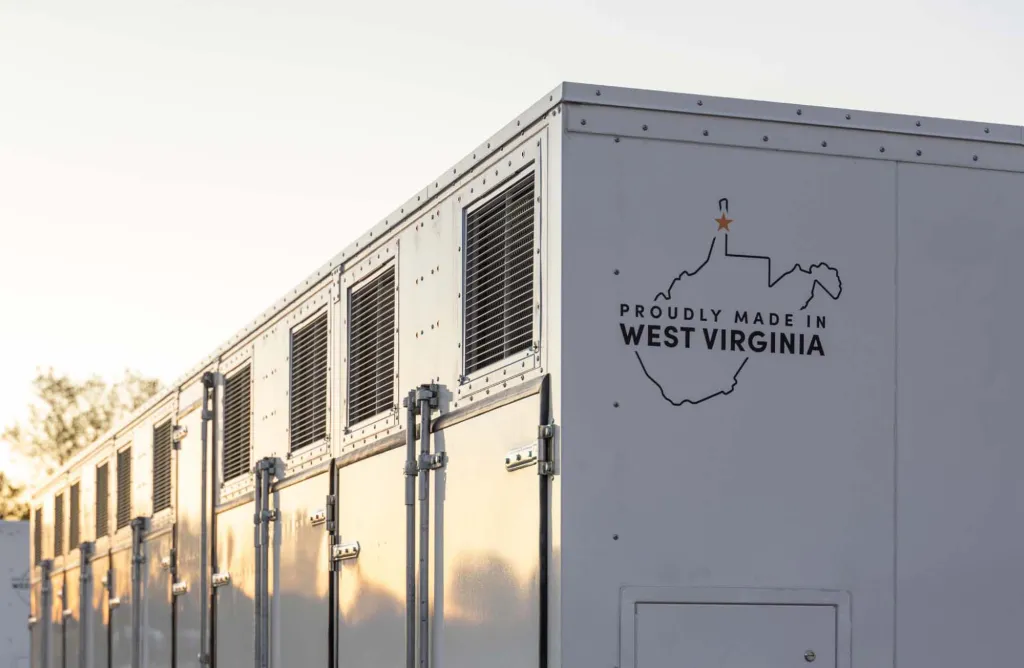
- A manufacturing facility in Weirton, West Virginia, scaled to ship washer-sized modules at multi-megawatt per acre density, but without independently published MW-scale performance metrics.
Form Energy’s website and press releases mention partnerships such as a Great River Energy project and a Puget Sound Energy memorandum for a 10 MW/1 GWh pilot—none of which approach the 300 MW scale described in the Google report.
Why this matters now
Data centers have traditionally leaned on lithium-ion batteries for seconds-to-hours of backup, often supplemented by diesel generators for extended outages. A credible 100-hour storage system could reshape how hyperscalers underwrite availability, shifting risk away from fossil fuels and short-duration chemistries. For grid operators, a multi-day block of dispatchable power promises new ways to balance seasonal wind and solar lulls without relying solely on natural gas peakers or pumped hydro, where geography limits siting options.

The human stakes cut across corporate strategy, climate commitments, and community resilience. As major tech companies vie to meet net-zero pledges, the ability to underwrite data-center uptime via renewables challenges traditional power-purchase frameworks and tilts procurement power toward storage innovators. Meanwhile, local communities hosting large-scale installations face land-use, permitting, and workforce considerations tied to a chemistry that—unlike lithium-ion—depends on iron and water.
Risks, gaps and technical caveats
- Verification gap: No third-party, MW-scale commissioning report exists. Published data cover only kW-scale prototypes and safety certification.
- Performance uncertainty: Reported 300 MW/100-hour output remains unconfirmed in site-level tests; degradation rates, cycle life beyond pilot cycles, and round-trip efficiency at scale are unpublished.
- Capital intensity: Unlike Li-ion’s declining $/kWh for short durations, long-duration capex per kWh of storage day is typically higher; without utility-scale cost disclosures, levelized cost of storage is speculative.
- Integration complexity: A 30 GWh footprint demands new grid-planning regimes—interconnection studies, protection schemes, land-use permits, and safety protocols for high-energy chemical systems.
- Supply chain and manufacturing: Iron is abundant but pellet and electrode manufacturing at tens of gigawatt-hours per year must scale reliably; stack replacement intervals and recycling pathways will test emerging O&M practices.
Competitive context
In the long-duration space, iron-air is one entrant among pumped hydro, flow batteries, compressed air energy storage (CAES), and hydrogen-based systems. Each comes with trade-offs:

- Pumped hydro: Offers multi-day dispatch but is site-constrained by geography and environmental reviews.
- Flow batteries: Can deliver high cycle life and modular siting but remain cost-competitive primarily at sub-8-hour durations to date.
- CAES: Yields seasonal storage potential but suffers round-trip losses and requires cavern geology.
- Hydrogen: Leverages existing gas networks but incurs high conversion losses and infrastructure inertia.
For timescales under 4 hours, lithium-ion retains an efficiency edge and compact footprint. But for firms exploring multi-day resilience—especially in off-grid or microgrid scenarios—iron-air promises cost benefits per day-hour stored if performance scales as reported.
Verification points and likely operational challenges
- Official confirmation of deal scope, price, site location, and delivery schedule from Google or Form Energy.
- Publication of MW-scale commissioning reports detailing continuous discharge duration, round-trip efficiency, and cycle degradation under real-world conditions.
- Utility-scale cost disclosures: capex per kWh of stored duration, levelized cost of storage comparisons versus gas peakers and Li-ion.
- Grid-integration studies: interconnection timelines, protection settings, and permitting milestones for a 30 GWh facility.
- Supply chain audits: raw iron sourcing, module throughput at the Weirton plant, and projected manufacturing scale-up rates.
- Operations and maintenance protocols: stack replacement cadences, recycling or reclamation plans for iron pellets, and safety drills for aqueous chemistries.
What to watch next
- Any SEC filings or energy-sector disclosures from Form Energy regarding new funding rounds or an IPO.
- Regulatory filings in Minnesota for interconnection applications or environmental reviews tied to the data-center project.
- Third-party analyses from Energy Information Administration, EPRI, or state commissions on the viability of 100-hour iron-air deployments.
- Tech sector commentary on how multi-day storage shapes corporate renewable procurement and data-center resilience strategies.